
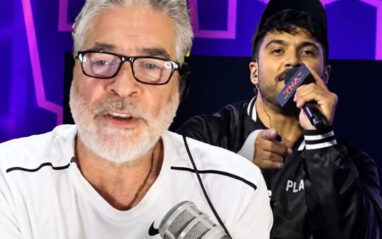
Vince Russo isn’t letting TNA Wrestling off the hook for Max Caster’s controversial Bound For Glory rap. The former WWE and TNA writer believes the company deserves just as much criticism for allowing the segment to happen in the first place, and he thinks firing Caster was a terrible business decision that threw away a golden opportunity for attention.
The controversy started at TNA Bound For Glory on October 11, when Caster made his debut against Moose and delivered a controversial entrance rap referencing the deadly attack in Riyadh. The lyric sparked immediate backlash, leading TNA to issue a public apology and cut ties with Caster after just one appearance.
During a discussion with Jeff, Russo questioned how TNA allowed someone known for controversial raps to walk through the curtain without anyone reviewing his material beforehand. Russo made it clear that he wasn’t completely defending Caster’s judgment, but he believes management failed to do its job.
“To me, if they asked him what he was gonna rap, they approved it and then he changed it to this, I understand why he got fired. Any other situation, I don’t think he should have got fired. They never asked him that. That’s the problem, bro. This is the guy’s very first appearance on the show. Okay. If I am a producer, I want to hear his rap. I want to hear what you’re going to go out there and say. They never did that, bro. No, no, no producer, not Carlos Silva himself. Nobody asked him what he was gonna say.”
Russo explained that the situation was a failure on both sides. While Caster should have understood that referencing a real-life tragedy could create problems, Russo argued that TNA officials had a responsibility to prevent something like that from happening.
“The problem’s twofold here, bro. The problem is, bro, Max Caster in wrestling, Jeff, you always have to think the worst. You always have to think the worst. And you also you always got to side on the side of caution. Could could this be an issue? And and is it worth the issue?”
Russo then answered those questions himself, making it clear that Caster made a mistake but TNA management shouldn’t escape criticism.
“So, the answer to those questions are yes, this can be an issue and no, it’s not worth the consequences. So, that that’s on him for not thinking that through, but let let’s be honest. No producer, nobody at that company asks him what he was going to rap and that’s on them. Yeah. That’s on them.”
That criticism lines up with previous information about the situation. As Ringside News previously covered, Caster’s controversial lyric was not scripted or approved by TNA beforehand. Additional details later indicated that Caster had been given creative freedom over his entrance rap and company officials were unaware of exactly what he planned to say.
However, Russo’s frustration wasn’t limited to TNA’s lack of oversight. He also questioned why the company immediately fired Caster instead of using the controversy to generate interest in its television programming.
Jeff pointed out that TNA’s official statement addressing the incident had attracted roughly two million views on Twitter, arguing that the attention could have translated into viewers tuning in to see what Caster would do next.
“Look how much attention this guy just got for your company. Oh, yeah. How much attention would it be if he was on the next episode? What’s he going to say this time? It’s like I feel like these people shoot themselves in the foot just to please a mob that doesn’t even watch their show because I guarantee you the most the most of the people that complain about this don’t even watch TNA.”
Jeff suggested that TNA could have required Caster to apologize on television while keeping him around, potentially creating another talking point instead of immediately ending the relationship.
“But maybe more people would watch if this guy who you don’t know what he’s going to say comes out on the next episode. Like all the attention you got and you just flushed it down the toilet. Business-wise, I don’t understand that, right? Because you could have had if if you felt this strongly about it, you could have had the guy apologize during the next show, you know, you know, and keep him around and let let and people would talk about that as well.”
Russo agreed with that assessment and compared the situation to the attention he receives whenever Jim Cornette criticizes him publicly. Russo explained that even negative publicity can benefit someone when enough people become curious about what happened.
“Bro, it’s it’s funny, Jeff, because I swear to God, this is the godhonest truth that you know, Cornett’s doing that uh YouTube series for Vice, you know, with his thing and like one of the episodes was me, right? And bro, that episode, it’s got a million views, bro. I think that’s great for me. It’s like, thank you, Jim.”
Russo argued that TNA should have taken a similar approach with Caster, suggesting that the promotion could have capitalized on the attention without immediately ending his run.
“They they’re they’re going to Google my name, uh, you know, just out of curiosity of everything that you’re saying. And I mean, thank you very much. But like you said, Jeff, two million people saw this, bro. Have the dude apologize on the show. Like, keep it going. You know what I mean?”
Jeff then doubled down on his belief that TNA had made the wrong call, arguing that a follow-up appearance from Caster could have attracted curious viewers.
“I don’t agree with that. And I think it’s stupid business, too, because of all the attention they got. If he was going to come out on TNA this week, I bet you a lot of people would want to would turn tune in just to see what the hell he was going to say.”
Despite Russo’s criticism, TNA has already made its position clear. The company acknowledged responsibility for allowing the segment to air and confirmed that Caster would no longer be wrestling for the promotion. TNA President Carlos Silva personally made the decision to end the relationship, according to previous coverage.
Caster has also addressed the controversy himself, apologizing to the people who helped him secure the opportunity while acknowledging the consequences of his actions. More recently, he announced that he was stepping away from wrestling to seek therapy following the fallout.
Russo’s argument ultimately comes down to two issues: TNA should have known what Caster was going to say before sending him out there, and firing him immediately may have cost the company an opportunity to turn controversy into television interest. TNA clearly decided that distancing itself from the comments was more important than any potential attention Caster could bring. Whether keeping him around would have actually helped business is another question, but Russo isn’t buying the idea that cutting him loose was the only option.
Do you think Vince Russo has a point about TNA sharing responsibility for Max Caster’s controversial rap, or was firing him the right decision regardless of whether management approved his material? Let us know what you think in the comments below.
This transcript was produced exclusively for Ringside News from the original recording. Republishing the transcription in full is prohibited. When using excerpts, provide prominent credit and a link to this article.
Do you think Vince Russo has a point about TNA sharing responsibility for Max Caster's controversial rap, or was firing him the right decision regardless of whether management approved his material? Please share your thoughts and feedback in the comment section below.
