
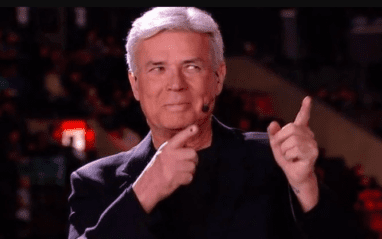
Kofi Kingston and Xavier Woods leaving WWE shocked a lot of fans — but according to Eric Bischoff, the situation makes complete sense once you stop looking at it emotionally and start looking at it like a business.
This comes after reports from Bryan Alvarez claimed WWE approached New Day about restructuring their existing deals instead of simply letting the contracts play out naturally. Kingston and Woods rejected the proposed terms before ultimately being granted their release.
While speaking on the 83 Weeks podcast, Bischoff was asked directly whether he was surprised WWE allowed such longtime stars to walk away. Instead of sounding shocked, Bischoff immediately argued that New Day’s longevity may actually be part of the reason WWE was comfortable moving on. He explained that while fans may view New Day as untouchable because of their loyalty and history, WWE has to evaluate talent differently under the current business structure.
“Nope. For all the reasons you just stated. I mean, I agree with everything that you just said, which probably is the reason why their time was essentially up. It had played itself out.”
Bischoff then acknowledged that fans would likely react negatively to that statement, but said wrestling fans often ignore the business side of the industry when discussing beloved acts.
He pointed out that the same wrestling audience criticizing WWE now is the same audience that once criticized WCW for continuing to pay older stars massive guaranteed deals long after their peak years.
“I mean, I know, first of all, I know that statement is going to get just a ton of negative feedback, but that’s okay. I know where it’s coming from because you have to look at the wrestling business as a business. How many times did the same internet wrestling community audience — well, probably not the same audience, but one just like it back in the day — criticize me for holding on to people too long past their prime?”
Bischoff then recalled the exact criticisms WCW used to receive when it carried expensive long-term contracts.
“‘You’re paying them too much money.’ I mean, that was the narrative. In America, you can retire there, never have to work again, get hurt, still get paid.”
Even while defending WWE’s side of the decision, Bischoff made it clear he understands why fans are emotionally attached to New Day and why people feel the team deserved better treatment after so many years with the company. He repeatedly stressed that the praise fans give Kingston and Woods is legitimate.
“The internet wrestling community audience, in general, can virtue-signal their asses off. ‘Oh my gosh, they’ve been with the company forever. They were so loyal.’ And I’m not discounting any of that, by the way, because all of it is true. “But none of it guarantees you a job for life. What the hell?”
But then Bischoff pivoted right back into the financial side of the situation and argued that loyalty alone cannot guarantee somebody a permanent high-paying spot forever. From there, Bischoff started breaking down what he believes is the biggest factor behind WWE’s recent contract restructuring efforts under TKO.
According to Bischoff, many older WWE contracts were negotiated under an entirely different version of the company — one built around a nonstop touring model that no longer exists. He explained that talents like New Day originally signed deals based on workloads involving constant travel, house shows, and hundreds of live event dates every year.
“If whatever contract that they were being asked to renegotiate was a contract that was, in one way, shape, or form, predicated on a previous agreement — which most of the time they are — you may make lateral moves along the way when you sign new agreements, but if you’re a high-profile talent, like New Day was back then when they signed their most recent agreement before leaving, that agreement probably had a lot to do with 250 days a year on the road.”
Bischoff then pointed out that the modern TKO version of WWE simply does not require that level of touring anymore: “That doesn’t exist anymore.” He said that reality naturally forces WWE to reevaluate contracts that were built around a completely different business model.
“So, can the company afford to pay someone who was going to be providing services at a certain level when that’s no longer required? You can for a while, but you can’t indefinitely.”
Bischoff even created a specific term for these older WWE deals, calling them “hangover agreements.” He explained that many current contracts are still financially tied to the company’s older revenue structure and touring system.
“And I think what we’re seeing now is the maturation of that process, where you’re going to see people who still had — I’ll call them hangover agreements, meaning that they were based upon primarily the amount of money that they had been making two years before, five years before, in some cases, or more.”
He then made it clear that TKO is almost certainly going to continue rewriting those deals moving forward.
“Those deals are going to have to be rewritten because the business model has changed.”
After explaining WWE’s contract philosophy, Bischoff shifted into a much larger discussion about tag team wrestling itself and why tag divisions become difficult to justify financially in a corporate environment focused heavily on efficiency.
He specifically referenced his own WCW years and admitted that one reason he didn’t give as much importance to tag team wrestling was because the math behind it became difficult to justify.
“If I was a tag team — this goes back to when I was running WCW and why I tried to unwind, when I did unwind, I de-emphasized the tag team division — because if you just look at it from a dollars-and-cents perspective, you’re putting twice as many assets, you’re utilizing and paying for twice as many assets for a tag team match as you have to pay for in a singles match.”
Bischoff continued expanding on the labor-cost side of tag team wrestling and explained that while fans often only look at the entertainment aspect, companies have to look at payroll differently.
“You get the same out of it in terms of content time, but you have more labor, twice as much labor.”
He then explained how quickly those costs explode once guaranteed contracts reach high levels. Bischoff then explained why WWE can’t simply maintain a tag division with only a few teams.
“Well, it doesn’t sound like much when I say it that way, but when you’re talking about paying people $600,000, $800,000, $900,000, or a million dollars a year in downside guarantees, and you need four of those people for one tag team match — if you want to have a tag team division, you’ve got to have a bunch of those people. Otherwise, the same four guys are going to wrestle each other every week. That sucks.”
Even after all the financial criticism, Bischoff admitted there is still absolutely creative value in tag team wrestling and that dedicated fans genuinely care about it. But ultimately, he questioned whether that audience is large enough for a corporation like TKO to prioritize financially.
“Now, you can argue creatively that there’s something special about tag teams that still satisfies a certain niche in the audience. I’ll buy it. I probably not only buy it, but would support that and agree with it. But is it a big enough part of the audience to justify it? From a mathematical point of view, it doesn’t work.”
Finally, Bischoff warned fans that New Day’s exit may only be the beginning of these types of roster decisions under TKO’s management style.
“The more TKO looks at WWE as a business property, the more you’re going to see those kinds of changes.”
Meanwhile, speculation continues building around a possible AEW move for New Day, especially with internal excitement reportedly growing over dream matches involving The Young Bucks.
Now the question becomes whether WWE made a smart long-term financial decision — or whether letting one of the most successful tag teams in company history walk away eventually becomes a major mistake.
Do you think WWE was right to restructure New Day’s contracts, or should the company have done whatever it took to keep Kofi Kingston and Xavier Woods? Drop your thoughts below and let us know.
This transcript was produced exclusively for Ringside News from the original recording. Republishing the transcription in full is prohibited. When using excerpts, provide prominent credit and a link to this article.
