
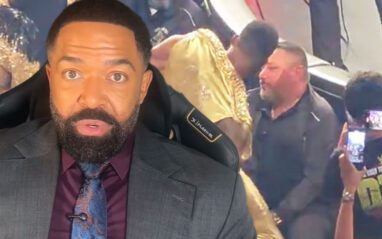
David Otunga has completely changed his read on the lawsuit against Montez Ford after getting a look at a new camera angle. The former WWE star and attorney previously leaned toward Ford and WWE’s side, but he now believes Noel Lucas has a “substantially stronger battery case” than he initially thought.
In a new video uploaded on October 19, Otunga went straight back to something he said during his original breakdown. At the time, he stressed that another camera angle showing deliberate and repeated contact could completely change his analysis — and now he says that’s exactly what happened.
“Remember my first video, when I said, ‘If another angle or credible testimony establishes deliberate repeated contact, then the battery analysis changes substantially.’ Well, now we have another angle, and it changes my analysis.”
The original footage left Otunga questioning whether the physical contact described in Lucas’ lawsuit even happened. This new angle was apparently much different, as Otunga said he could now see what appeared to be Ford repeatedly rubbing his thigh against Lucas’ leg.
“In the original footage, I couldn’t clearly see the contact that Lucas was alleging. But from this angle and in this footage, I can see what appears to be Montez Ford’s inner left thigh repeatedly rubbing against Lucas’s right leg.”
That’s a pretty significant shift from Otunga’s first analysis. He previously said the footage available to him didn’t clearly show contact and that any contact he could make out appeared potentially incidental, but he no longer finds that explanation nearly as convincing.
Otunga explained that Ford’s defense could still argue that any contact happened accidentally while he was dancing. The problem, in his view, is that the apparent repetition shown in the new footage makes that argument harder to buy.
“Now, one accidental brush is one thing, but repeated rubbing makes that explanation harder for me to accept. And that brings us to intent. Intending to dance isn’t necessarily intending to touch somebody. But, ‘I was trying to make him laugh’ doesn’t answer whether the contact was deliberate. You can intend a joke and still intentionally make offensive contact.”
Otunga stressed that Lucas wouldn’t have to prove Ford wanted to hurt him for a battery claim. Instead, he believes a jury could look at Ford’s movements, positioning and the apparent repeated contact when deciding whether it was intentional.
“And Lucas doesn’t have to prove that Montez hated him or wanted to injure him. At the same time, an accidental brush doesn’t become battery just because somebody didn’t like it. Now, a jury would look at the movements, the positioning, and the repeated contact, and they can infer intent from the evidence. So, that’s why this angle matters.”
The new footage also changed how Otunga views Lucas’ claim under the Illinois Gender Violence Act. He said the apparent rubbing and sexual nature of Ford’s movements now give Lucas a much stronger argument than he appeared to have from the original footage.
“Now, that brings us to the Illinois Gender Violence Act. And yes, that law protects men, too. For the theory we’re discussing, Lucas has to establish battery, a physical intrusion of a sexual nature, and coercive conditions. This new angle gives him a much stronger argument. The rubbing and sexual movements support his claim about the nature of the contact.”
Ford’s positioning also stood out to Otunga. He described Ford as essentially straddling Lucas and said that could potentially support Lucas’ argument that his ability to move was restricted during the interaction.
“Then look at Ford’s positioning. He’s basically straddling Lucas. From what I can see, Lucas would have to physically move forward in order to stand up. Now, that supports an argument that his movement was restricted. The defense can dispute how restrictive it actually was, but saying he could have pushed Ford away doesn’t settle the question.”
That doesn’t mean Otunga suddenly believes every part of Lucas’ lawsuit is a winner. His biggest change of heart specifically concerns the battery claim and how the new footage could affect the Gender Violence Act argument.
“All right. Here’s my take on this. This new angle gives Lucas a substantially stronger battery case. I mean, we see the repeated contact, which supports his argument that it was deliberate. And Ford’s positioning also strengthens the coercion argument under the Gender Violence Act.”
Otunga also cautioned that having a stronger case doesn’t automatically mean Lucas wins everything he’s asking for. Proving liability and proving that he’s entitled to substantial damages would still be two different fights.
“Now, that doesn’t mean Lucas wins every claim or gets a huge payout. Liability and the amount of damages are separate questions. For battery, he doesn’t need to establish the severe emotional distress required by that separate claim. But a substantial damages award still needs supporting evidence.”
As for WWE, Otunga said his understanding is that Ford improvised the interaction rather than WWE approving it ahead of time. Having worked for the company himself, he noted that performers improvising while trying to stand out isn’t exactly unusual.
“My understanding is WWE didn’t approve this interaction beforehand. Ford improvised. And having worked there and been a WWE Superstar, I can tell you improvisation is very common. Every movement isn’t approved before you go out. That’s on you as the performer to try to stand out and get yourself over in front of the audience.”
However, Otunga doesn’t believe that alone automatically gets WWE off the hook. He said Lucas could argue that Ford was acting within the scope of his job by entertaining the audience, while WWE would still be able to challenge whether this particular conduct actually fell within that scope.
“But lack of advanced approval doesn’t automatically protect WWE from the separate battery claim. If Ford was acting within the scope of his work by improvising and entertaining the crowd, Lucas can argue WWE is responsible, even though it didn’t approve this particular interaction.”
The same goes for Ford personally. Otunga made it pretty simple when addressing the idea that Ford was performing as part of a WWE show.
“Being in character isn’t legal immunity.”
The new footage has also changed how Otunga views the possibility of WWE simply settling the lawsuit. He isn’t reporting that any settlement talks are actually happening, but he now believes Lucas has more leverage than he appeared to have before.
“So, do I think WWE will settle? I think it’s a realistic possibility, and this footage gives Lucas more to work with.”
Otunga stressed that companies consider everything from legal expenses to risk and bad publicity when deciding whether fighting a lawsuit is worth it. That means WWE could potentially settle without agreeing that everything Lucas alleged actually happened.
“Now, I don’t know whether negotiations are happening or what his demand is, but companies weigh the evidence, legal costs, risk, and settlement price. They don’t have to agree with every allegation to decide settling makes sense. And a settlement wouldn’t by itself prove the allegations. I can believe Montez was trying to be funny and still think this footage creates a serious legal problem.”
That’s a pretty dramatic turnaround from Otunga’s first look at the case, when he leaned toward Ford and WWE based on the footage available at the time. The new angle hasn’t convinced him that Lucas will win the entire lawsuit, but it has changed his mind on the biggest question he had before — whether the alleged repeated contact could actually be seen.
What do you think about David Otunga changing his analysis after seeing the new angle of the Montez Ford interaction? Let us know in the comments below.
This transcript was produced exclusively for Ringside News from the original recording. Republishing the transcription in full is prohibited. When using excerpts, provide prominent credit and a link to this article.
