
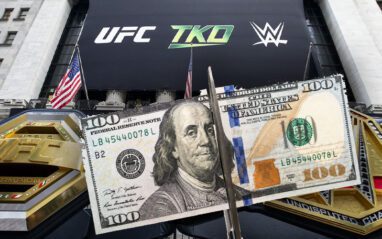
Nick LoPiccolo believes WWE’s roster cuts and lower contract offers are exposing an uncomfortable reality for professional wrestlers: the leverage created by AEW may be disappearing.
The talent agent addressed TKO Group Holdings’ falling stock price and WWE’s changing cost structure in a series of posts on July 15, 2026. TKO had lost roughly $7.5 billion in market value from its March high, but LoPiccolo rejected the idea that WWE could repair a loss of that size by lowering wrestler salaries or adding more house shows.
“I also don’t view the salary cuts as some desperate attempt to repair the $7.5 billion erased from TKO’s peak valuation. Cutting talent compensation or adding house shows won’t make a material dent in a loss of that size.”
Instead, LoPiccolo argued that TKO is using the stock decline as cover to reset WWE’s expenses before another major media-rights cycle begins. He believes management can now point toward shareholder pressure and financial discipline while lowering salaries, trimming the roster and expanding live events.
“This looks more like a reorganization and an opportunity to reset the cost structure before the next major TKO media-rights cycle begins taking shape in two or three years. The stock decline gives convenient cover to do it.”
“Management can point to valuation pressure, operational discipline and shareholder expectations while lowering salaries, trimming the roster, expanding live-event inventory and rebuilding the company around the economics it wants for the next cycle. The market is effectively allowing TKO to reset itself now.”
The biggest part of LoPiccolo’s argument is not simply that WWE is cutting costs. It is that TKO appears comfortable making those decisions without worrying that released wrestlers will strengthen AEW.
“Roster cuts, salary compression and allowing established talent to walk aren’t the moves of a company worried that AEW, or anyone else, is about to gain meaningful ground. Real competition gives labor leverage. TKO is operating like that leverage no longer exists.”
LoPiccolo said a real bidding war would force WWE to offer larger contracts and retain talent it might otherwise allow to leave. Instead, he believes TKO is acting like AEW cannot absorb expensive wrestlers at scale or turn those signings into a serious threat.
“TKO clearly has zero fear that those decisions will strengthen AEW. If it believed AEW had durable media economics, meaningful distribution leverage or the ability to absorb expensive talent at scale, every release and every salary cut would create competitive risk. TKO is behaving like there’s nowhere else for that leverage to go.”
He also warned wrestlers not to assume another company will always be waiting with a larger offer.
“I told you another billionaire signing wrestlers wasn’t a sustainable labor market. I told you your leverage couldn’t depend on two wrestling companies bidding against each other forever.”
LoPiccolo argued that talent depending entirely on management approval and the possibility of an AEW offer does not possess real bargaining power.
“If your entire strategy is keeping management happy and hoping another wrestling company eventually offers you more money, you don’t have leverage. You have permission.”
LoPiccolo’s position is that WWE’s salary compression is not a temporary panic move. He believes TKO sees an opportunity to lower compensation and reshape its roster because AEW no longer forces WWE to compete aggressively for every established wrestler on the market.
Do WWE’s roster and salary decisions prove that wrestlers have lost leverage, or can AEW still force WWE to pay more? Leave your feedback in the comments.
