
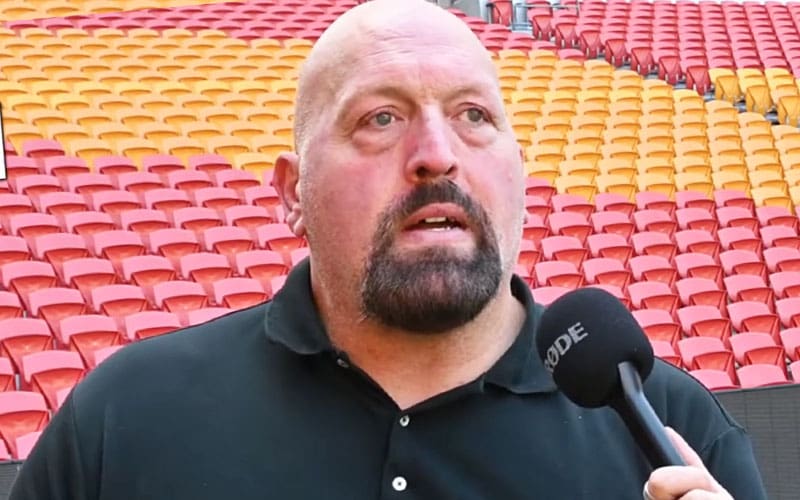
Paul Wight is opening up about one of the darkest periods of his life — revealing doctors once warned him he likely wouldn’t survive past his mid-40s if he didn’t undergo life-saving surgery for acromegaly.
While speaking on the High Performance podcast, Wight gave an emotional and brutally detailed look at the long-term physical toll the condition has taken on his body over the years.
Wight explained that he was diagnosed with acromegaly at just 19 years old after a doctor at Wichita State recognized signs connected to the hormonal disorder, including the size of his hands, jaw structure, and facial features. According to Wight, the diagnosis completely changed his understanding of why his body had developed the way it did.
“I was, uh, 19, right? I went my whole life—I went to Wichita State, and the doctor there had worked at the Mayo Clinic and was familiar with it. He looked at my hands, and there’s different things—like the roof of my mouth is very high, and my jawline and sinuses and stuff like that. He says, ‘I think you have acromegaly.’ I’m like, ‘What?’ And then within a week, I was at the Mayo Clinic, you know, and they’re telling me they’ve got to do this pituitary surgery. Like, I had a tumor. This is why I’m this way.”
Wight admitted doctors made the situation sound incredibly serious at the time and warned him that refusing surgery could eventually kill him because the condition would continue enlarging his organs, bones, and heart over time. He even revealed that, as a teenager, he almost decided against having the surgery altogether because death still felt so far away to him mentally.
“I almost didn’t get the surgery, and they were telling me, ‘Well, if you don’t get this surgery, you’ll probably be dead by the time you’re 45 because this will shut down, this will happen, this will happen.’ And I remember thinking like, ‘Ah, 45 is a long time away. I don’t know.’”
According to Wight, his sister ultimately pushed him into getting the operation, which involved surgeons entering through his nose to remove the pituitary tumor affecting his body. He then described the terrifying recovery process and the warnings doctors gave him afterwards.
“But you have this big bandage on your nose, and your sinuses are packed with gauze, and they tell you no bending over, no straining. If you suddenly get a really wet nosebleed, try to call 911 because the synovial fluid just dumped out of your brain.”
Although the surgery likely saved his life, Wight admitted he is still dealing with the effects of acromegaly decades later. He explained that the disorder enlarges bones, joints, organs, and other parts of the body over time, creating enormous long-term strain physically.
“With acromegaly and the growth hormone, the pituitary gland, it will enlarge the heart. It will grow the bones to where joints stop moving, fusing them. Organs will grow—your liver, your intestines, all that stuff will overgrow—and you’ll probably be dead by, you know, I think late 40s is a good estimate.”
Wight then revealed just how brutal the last several years have been medically, admitting he has undergone major surgeries almost every year for the past seven years. He explained that both knees and both hips have now been replaced, while other complications continue surfacing as his body ages.
“I’ve been through hell the past seven years. I’ve had a major surgery the past seven years every freaking year. I’ve had both knees done. I’ve had both hips done. The first hip was the first one I had done—I had five operations on the first hip.”
Wight also revealed that his unusually dense bones — something tied to acromegaly — created major complications during one surgery because doctors struggled to remove old implants from his hip.
“It took him three and a half hours and over 1,000 hammer hits to cut the old receptacle out of my hip because my bones are that hard.”
Even after all of that, Wight recently needed another operation after doctors discovered bone growth pressing into his spinal cord.
“I was doing really good last year—something started going wrong in my back. I had a little piece of bone that was growing right into the spinal cord, so they had to go in and trim the bone out.”
Despite everything he’s gone through physically, Wight admitted he still considers himself lucky compared to many other people diagnosed with acromegaly because his heart and several major functions remain healthy. At this point, the former world champion says he views himself like an old farm truck that keeps running no matter how many repairs it needs along the way.
Do you think fans fully understood the physical toll acromegaly has taken on Paul Wight throughout his life and wrestling career? Leave your thoughts and feedback below.
This transcript was produced exclusively for Ringside News from the original recording. Republishing the transcription in full is prohibited. When using excerpts, provide prominent credit and a link to this article.
