
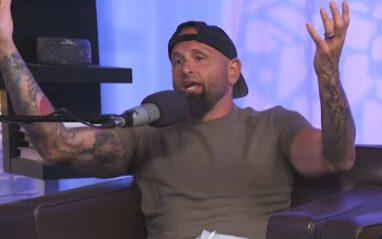
WWE once told Karl Anderson that his age was a problem—then signed him four years later and eventually brought him back for another run.
Anderson opened up about WWE’s constantly changing hiring standards on TMZ’s Inside the Ring while Luke Gallows was explaining how the company repeatedly moves between recruiting independent wrestlers, bodybuilders and former college athletes. Anderson used his own career as proof that whatever WWE says it wants today could be completely different tomorrow.
“They told me in 2012 that my age was a problem, and then they brought me in during 2016. Then here we are—they brought me back in 2022. That’s not a shot. It’s just a cycle of business. It continuously changes.”
Anderson was around 32 when WWE decided he was already too old. Instead of his career winding down, he went on to become a major part of New Japan Pro Wrestling before finally joining WWE alongside Luke Gallows in 2016.
The subject hit close to home because The Good Brothers had held a wrestling seminar in Corona, California, one night earlier. A 38-year-old participant asked whether he had already missed his opportunity to make something happen in professional wrestling. Anderson’s answer was an immediate no.
“That’s why, when people—we did a seminar last night in Corona, California—and this person said, ‘I’m 38 now. Am I too old? Have I missed my spot?’ Dude, no. I don’t think you have.”
Anderson said age always sounds different depending on where someone currently stands. A 26-year-old may consider 38 ancient, while that same person’s outlook could completely change once they reach that age themselves.
“To a 26-year-old, a 38-year-old sounds old, right? To a 38-year-old, a 46-year-old sounds old. But when you’ve done all those ages, you start to go, ‘Hold on a second, dude.’”
Being rejected by WWE over his age affected Anderson more than he understood at the time. Instead of fully appreciating what he was accomplishing in New Japan, he was already worrying about whether his biggest opportunities had passed him by.
“I wish I would have been more relaxed and more chilled and not kept thinking about what was coming next. If I had just enjoyed the journey at 32, I could have enjoyed New Japan Pro Wrestling more at 32, 33 and 34 before I even went to WWE.”
WWE’s decision made Anderson feel like the clock was already running out. In reality, he still had years of major television appearances and championship runs waiting for him.
“They told me I was too old at 32. It kind of brought me down a little bit. I didn’t realize I had this whole decade-long, awesome career—WWE, in and out, AEW and TNA—to come in the future.”
Anderson’s message to older wrestlers was simple: stop treating one company’s rejection like the final verdict on your career.
“If you can just enjoy what’s going on now, man, there’s so much ahead, no matter what age you are.”
WWE didn’t want Anderson at 32 because of his age. Four years later, the company signed him. Six years after that, WWE hired him again. That alone shows how quickly the rules can change—and why wrestlers shouldn’t let one rejection convince them the ride is over.
Do you think wrestling companies place too much importance on age, or should experienced wrestlers continue getting opportunities well into their 30s and 40s? Leave your thoughts in the comments.
This transcript was produced exclusively for Ringside News from the original recording. Republishing the transcription in full is prohibited. When using excerpts, provide prominent credit and a link to this article.
