
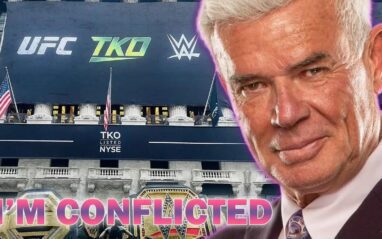
The backlash surrounding TKO asking WWE talent to take pay cuts keeps growing — and now Eric Bischoff is offering a much deeper explanation for why the company may believe these pay cuts are necessary.
This comes after reports revealed WWE has been aggressively pushing talent to accept reduced contracts under the TKO system, with Bryan Alvarez stating on Wrestling Observer Live that TKO wants “50% restructuring” on some existing deals because talent workloads are significantly lighter than they were when many contracts were originally signed.
Now, while speaking on the “83 Weeks” podcast, Eric Bischoff addressed the growing controversy and explained why he believes TKO’s thinking likely goes much deeper than simply trying to slash payroll immediately.
The interviewer first pointed out why many fans — and likely many wrestlers — would naturally feel frustrated by the situation, especially if talent signed deals recently and suddenly found themselves being asked to renegotiate. The concern centered around the idea that many wrestlers upheld their side of the agreement completely before the company suddenly changed direction financially.
“Hey, we know he signed that deal last year, but we can’t honor it. That, I think, is going to rub a certain amount of the fan base wrong—but maybe more than the fan base.”
The interviewer then framed it from the talent perspective, pointing out how difficult it must be for wrestlers who did everything WWE asked of them.
“I just signed this deal last year. I showed up on time. I was a model employee. I did everything that was asked of me, and now the game has changed.”
Bischoff admitted that from the outside, WWE’s financial success makes the timing of these pay reductions look strange because the company’s revenue has continued growing.
“I mean, not from the outside looking in, not from the business dynamics—ratings, revenue primarily. That’s the only thing that really matters, is revenue, right?”
The WWE Hall of Famer then openly acknowledged that financially, WWE appears stronger than ever publicly.
“And if anything, revenue is up, performance is up. So from a revenue position, no, nothing has changed.”
But Bischoff argued that giant publicly traded corporations like TKO don’t make decisions based only on current-year profits. Instead, he believes the company is likely making moves based on long-term financial forecasting. He suggested executives probably examined what WWE’s cost structure would look like years into the future and decided changes needed to happen now.
“But I don’t think any business—especially a publicly held company, and especially one of this scope, the size and scale that TKO operates on—works on a month-to-month basis or year-to-year basis.“I’m guessing at some point there was an internal audit. There was somebody who sat down with a financial team and said, ‘Okay, let’s play out the next five years based on what we know and the trends we see. What does the next five years look like?’”
According to Bischoff, if those long-term projections suggested WWE’s existing contract structure was unsustainable, management would almost be forced to start making difficult decisions.
“And if you’re looking at a picture five years from now that suggests we can’t afford to continue with these type of agreements, you’re forced to.”
Even while defending the business reasoning, Bischoff made it clear he does not believe anyone inside WWE enjoyed making these calls. He specifically used The New Day as an example.
“I don’t think anybody was excited to do it. “I don’t think anybody was going, ‘Wow, which one of us gets to pick up the phone and call New Day and tell them we’re going to ask them to renegotiate their deal? This will be a great day. Let’s go get cocktails when it’s over.’ That didn’t happen.”
Still, he believes the decision was likely driven by financial information executives believed they could not ignore.
“But I’m guessing that the reason the decision was made to do it is because they had information that suggested they needed to manage their budget better or differently.”
The conversation then shifted toward morale and the public optics of talent taking pay cuts while top executives at TKO continue earning massive salaries.
The interviewer specifically noted that many fans are struggling with the idea that wrestlers are being asked to sacrifice while executives at the very top continue making enormous amounts of money.
“But I know that the optics of that are less than ideal when we just saw what the earnings were for the people at the top of the food chain at TKO.”
Bischoff admitted morale is almost certainly affected differently depending on the talent involved. He also suggested that many wrestlers are likely approaching the situation pragmatically and treating it as a career decision rather than an emotional one.
“I’m sure there are some who are greatly affected by it. I’m sure there are some that are kind of indifferent to it. And I’m sure that there are some that are basically being professionals and going, ‘Okay, this is my decision. I don’t have to stay here. I don’t have to make the decision to sign this piece of paper. I can ask for my release if I don’t like it here.’”
Bischoff stressed that wrestlers still have choices and can decide whether to bet on themselves elsewhere. He then acknowledged how cold that reality may sound, especially considering wrestlers have families and financial obligations.
“I have options, and I can exercise them. So what do I want to do? Do I want to bet on myself here, or do I want to bet on myself somewhere else? And I know that sounds really cold because they have families and they have bills.”
But Bischoff ultimately framed the situation as something that happens constantly throughout all industries, not just wrestling.
“Well, guess what? We’ve all been fired or, for whatever reason, had to change careers, change direction unexpectedly. That’s life, and you get through it.”
He also argued that wrestling fans react more emotionally because of the attachment they form to performers they watch weekly on television. Bischoff compared the situation to layoffs at giant corporations that rarely generate the same emotional public reaction.
“But big manufacturing companies, Google, all these big companies that are laying off 16,000 people—nobody gets emotional over that unless you’re one of them.”
According to Bischoff, wrestling fans respond differently because they feel personally connected to WWE stars.
“But this is different, right? Because now we know—we think we know—these people. These are our characters. We love them.”
That emotional connection, he says, is why fans become upset when wrestlers are affected by business decisions.
“Because of that connection that you create on television, all of a sudden the fan base is getting upset because Ari Emanuel makes so much money when we have to cut New Day. It’s probably not fair, but it’s life, and it happens everywhere every day.”
The comments give one of the clearest looks yet at how TKO may internally justify the sweeping contract changes already reshaping WWE’s roster. And with multiple talents already accepting reduced deals while others like Kingston and Woods walked away entirely, it feels increasingly likely that this is only the beginning of WWE’s financial restructuring era.
Do you think TKO’s approach to WWE contracts makes legitimate business sense, or is the company risking long-term damage to morale and talent relationships? Drop your thoughts below and let us know.
This transcript was produced exclusively for Ringside News from the original recording. Republishing the transcription in full is prohibited. When using excerpts, provide prominent credit and a link to this article.
