
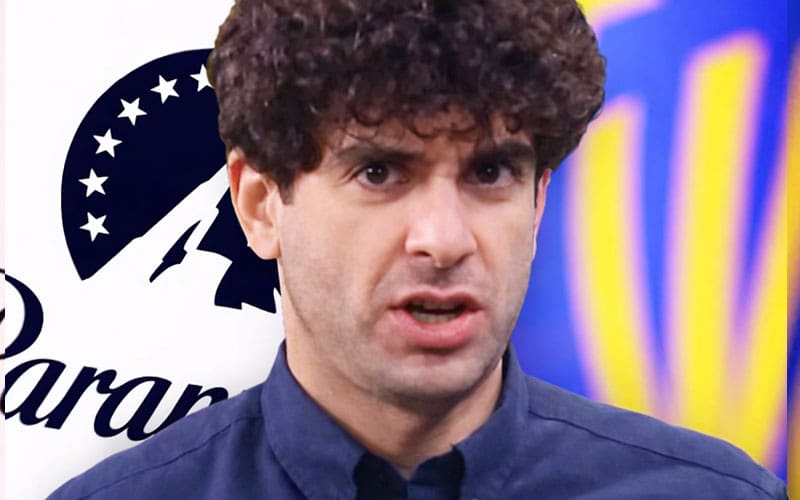
AEW’s future with Warner Bros. Discovery just got thrown back into uncertainty after a coalition of 12 states filed a federal lawsuit attempting to block Paramount Skydance’s massive takeover of WBD. The deal cleared the Justice Department, but state attorneys general are now asking a judge to stop it before Paramount can take control.
The Hollywood Reporter revealed that the lawsuit was filed Monday, July 13, in California federal court. California Attorney General Rob Bonta is leading the challenge alongside Arizona, Colorado, Connecticut, Massachusetts, Minnesota, Nevada, New Jersey, New Mexico, New York, Oregon and Washington.
The states claim the merger would combine two of Hollywood’s five biggest studios, giving the new company too much control over theatrical movie distribution and the licensing of television programming to cable providers.
“In a much-anticipated lawsuit filed in California federal court on Monday, the states allege that the acquisition will substantially throttle competition in wide-release and top-grossing theatrical distribution and cable licensing in violation of antitrust laws. They argue that the merger will combine two of the top five studios in Hollywood, leading to higher prices, fewer movies in theaters and a reduction in the variety and quality of content.”
The lawsuit accuses Paramount and WBD of violating the Clayton Act, which allows regulators to challenge mergers that could substantially reduce competition or create a monopoly. The states have asked Paramount not to close the deal while the case is being decided. If Paramount refuses, the coalition says it will seek a temporary restraining order to keep the takeover from moving forward.
“The states allege a violation of the Clayton Act, an antitrust law accounting for potential monopolies. They’ve asked Paramount not to close the deal until the case is decided. If not, they say they’ll file a temporary restraining order.”
That is a serious roadblock after the Justice Department’s Antitrust Division previously reviewed the transaction and declined to challenge it. The federal approval moved Paramount much closer to completing the roughly $110 billion deal, but it never stopped individual states from bringing their own antitrust case. Bonta argued that combining Paramount and Warner Bros. Discovery would hurt movie theaters, television distributors, entertainment workers and viewers by eliminating one of the industry’s biggest competitors.
“The unlawful merger of these two entertainment behemoths would lead to higher prices, lower quality, and less content for film and television, harming movie theaters, basic cable distributors, and ultimately, audiences on every sofa and movie theater seat in the U.S.”
Bonta also made it clear that California considers the entertainment industry too important to allow the deal to move ahead without a fight.
“California’s film and entertainment industry touches the lives of Americans daily—it comes into the living rooms of families, has a starring role in many young people’s first dates, and is a point of immense pride and employment for Californians up and down our state.”
Paramount has pushed back against the lawsuit and argued that the states are misreading the entertainment market. The company’s position is that the merger would create a stronger competitor capable of going against streaming and technology giants such as Netflix and Amazon.
The states see it very differently. Their lawsuit claims the combined company could control close to one-third of major theatrical releases and basic cable programming, leaving fewer studios competing to sell movies and television content.
That brings AEW straight into the middle of the uncertainty. AEW currently has a multi-year media rights agreement with Warner Bros. Discovery. Dynamite airs on TBS, Collision airs on TNT, and both shows stream live on Max as part of the expanded deal announced in 2024. WBD also holds distribution rights connected to AEW programming and pay-per-view events.
Nothing about that agreement has changed because of the lawsuit. Dynamite and Collision are not suddenly being pulled from television, and AEW has not lost its WBD deal. The bigger issue is what happens over the long term.
If Paramount completes the acquisition, AEW would eventually be dealing with a new corporate structure controlling TBS, TNT and HBO Max. That company could decide to keep AEW exactly where it is, expand the relationship or make changes once the current agreement gets closer to expiring.
The lawsuit now makes it impossible to know when—or whether—that ownership change will happen. The merger already faced opposition from Hollywood workers, movie theater owners and creators concerned about layoffs, fewer productions and Paramount’s plan to find more than $6 billion in cost savings after the companies combine. The legal challenge could delay the closing, increase the cost of the takeover or kill the entire deal if the states convince a judge that the merger violates federal antitrust law.
AEW’s current home remains secure under its existing WBD contract, but the company sitting across the negotiating table could still look completely different in the future. What appeared to be a clear path toward a Paramount-WBD merger has now turned into a federal court fight involving 12 states—and AEW will be watching closely.
Do you think the Paramount-WBD merger would help AEW by creating a larger media company, or could the corporate shakeup put Dynamite and Collision in a dangerous position? Leave your thoughts and feedback in the comments.
