
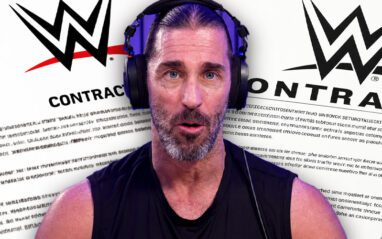
Stevie Richards doesn’t think WWE’s 90-day non-compete clauses need tweaking. He thinks they should be illegal.
While speaking on The Stevie Richards Show, Richards went after the way wrestling contracts are structured, arguing that talent are treated like employees in almost every way that matters. They are told when to show up, when to work, how to dress, and increasingly how their matches should unfold, yet they are still denied the protections that normally come with employee status.
“They’re not independent contractors. Let’s be let’s be real here. Everybody’s afraid to say maybe what two out two or three out of the 19 parameters or check check marks are possibly it’s not even a full two to three. They’re still kind of wavering like a 70/30 or something that in the way, but everything else is employee.”
Richards said the biggest giveaway is that wrestlers cannot simply take their services somewhere else the way an actual independent contractor could. A painter can finish one job and accept another days later. A wrestler under one of these deals cannot appear for a rival promotion just because the relationship with the first company has ended.
“You’re told when to show up. You’re told when to work. You’re told how to dress. You’re told exactly how your match is going to go more so than ever, right? Not just the finish. You’re told when to work. You can’t take days off. And you definitely, definitely can’t turn around. In that analogy that people use like, ‘Okay, I painted your house on Monday. Now I’m going to go paint AEW’s house on Wednesday.’ No, you’re not an independent contractor. You can’t do that.”
That led Richards straight into the part he clearly hates most: non-compete clauses attached to releases. He argued that once a company fires someone, it should not be allowed to control where that person works next, even if the wrestler continues receiving checks for another 90 days.
“By the way, non-compete clauses or no compete clauses should be legal. The minute—especially if you’re getting fired—that whole thing, ‘We’ll pay you for 90 days,’ it’s a way to skirt that, keep you quiet and keep you happy, but the real thing is…”
Richards then explained why that money is not the gift companies make it sound like. In his view, the 90-day delay gives the promotion exactly what it wants: time for the wrestler’s departure to cool off before another company can capitalize on it.
By the time the wrestler is free, the shock of the release is gone, the headlines have moved on, and some of the value that came with being fresh out of WWE has already disappeared.
“Devalued. That 90 days that you’re getting paid—how much money and time and energy and traction as far as you leaving one company or being told to leave and going to another is—it’s so much… how should I… Okay. It’s just so much gaslighting that’s involved with this that, you know, the, ‘Hey, don’t worry, you’ll make more.’ Well, we’ll just pay me more. How’s that?”
Richards isn’t arguing that wrestlers should lose their pay the day they’re released. His issue is that, if WWE has already decided to let someone go, he doesn’t believe that same company should still have the power to decide where that wrestler can—or can’t—work next. To him, that’s the clearest sign that calling WWE talent “independent contractors” simply doesn’t match the reality of how they’re treated.
Please credit Ringside News if you use the above transcript in your publication.
Do you agree that released wrestlers should be allowed to appear for another company immediately? Please share your thoughts and feedback in the comment section below.
