
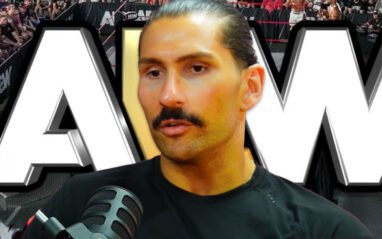
Richard Holliday doesn’t buy the idea that AEW deserves credit for independent wrestling being successful. While he admits having AEW talent pop up on indie cards can bring some extra attention, he thinks giving a major company credit for the entire scene would disrespect the wrestlers and promoters actually grinding on those shows every week.
During an appearance on the Direct Discussions podcast, Holliday was asked whether independent wrestling has benefited from companies like AEW and TNA allowing contracted talent to take outside bookings. When the interviewer specifically suggested AEW’s approach had helped make the independent scene more popular, Holliday immediately pushed back.
“No. No. I think that would discredit the work that independent wrestlers and independent wrestling companies have been doing. So, no.”
That’s not to say Holliday thinks having an AEW wrestler on an independent show is useless. He knows a recognizable television name can bring more people through the door, but he sees that as a bonus rather than the reason indie wrestling continues to survive.
“Is it cool if an AEW wrestler is on the same card? Yeah, it’s nice because, again, it might bring more additional eyeballs. But for that to be the reason that independent wrestling is successful? No. No way.”
Holliday also disagrees with people who think the independent scene isn’t doing particularly well right now. His biggest evidence is his own schedule, as he expects to wrestle more than 120 matches throughout 2026 across a ton of different promotions.
“I think that independent wrestling is successful. Some people will say it’s not successful. I’ll say it is successful. I just told you I’m going to have 120 matches this year. Not a lot of those are going to be repeat companies.”
For Holliday, constantly traveling somewhere new tells him there are still plenty of promoters putting on wrestling shows. He doesn’t believe every company needs to draw thousands of people before anyone can call it successful either.
“A lot of them are going to be, you know, I’m going somewhere for the first time. That means a lot of independent wrestling is happening. That means a lot of companies are running.”
Holliday argued that success looks different depending on the size and goals of the promotion. If a company draws 250 fans, turns a profit, pays everyone and sends the crowd home happy, he doesn’t see why that should automatically be treated as a failure.
“Okay, is everybody filling up 5,000-seat arenas, 1,000-seat arenas? No, not really. But then now we have to have a deeper conversation about what’s the level of success? What does success mean?”
He believes those smaller victories matter just as much to the health of the independent scene. Another promotion might regularly draw 600 people, but Holliday sees both situations as potentially successful depending on what each company is trying to accomplish.
“If success for an independent company is bringing 250 people, and the company is profitable, and everybody’s being paid, and everybody’s having a good time, who is anybody to say that that’s not successful? But then there might be somebody who says, ‘Well, I get 600 regularly, so that’s success to me.’ Okay, great.”
Holliday’s own calendar is another reason he isn’t buying the argument that independent wrestling is struggling. He said he’d start worrying if he couldn’t find work, but right now he has the opposite problem because he’s staying extremely busy.
“But all I know is that wrestling is happening, and there’s a lot of it. If I was struggling to find bookings and I was, you know, looking at my calendar and saying, ‘Man, I only have four matches for November,’ then I would say independent wrestling is hurting. But no, I’m booked out. I’m busy.”
He doesn’t think every independent wrestler automatically has that same experience, though. Holliday believes talent can create more opportunities for themselves by aggressively using social media, something that has already resulted in promoters specifically booking him because of his online popularity.
“Is it like that for everybody? No. Could it be like that for everybody? Yes, if they utilize social media. I’ve had plenty of instances where companies have said to me, ‘Yeah, we booked you because you’re hot online.’ Okay, great.”
Holliday has even seen that online attention turn into actual ticket buyers. He recalled working an AAW show in Chicago where two fans approached his merchandise table and told him they’d discovered him through his social media videos.
“I had two fans come up to my merch table and said, ‘Dude, we saw your reels online, and we saw you were going to be in Chicago, so we came to see you.’ I went, ‘Get out of here. Really? You’ve ever been to an AAW show?’ They went, ‘No.’”
That’s exactly how Holliday thinks individual wrestlers can help grow the entire scene. Those fans might have bought tickets because of him, but once they’re inside the building, they’re suddenly being introduced to an entire card of wrestlers they’d never seen before.
“But what does that do now? They come in the door because they want to see me live. But now AAW is going to put on an incredible show. They’re now going to see six or seven other matches. They might say, ‘Whoa, never saw this wrestler before. He’s awesome.’ Now we got a new fan.”
Holliday isn’t pretending a couple of fans discovering him online is going to transform independent wrestling overnight. His point is that if more wrestlers consistently promoted themselves and brought even a few new people through the door, all of those small gains could start adding up.
“My social media brought somebody in. Are these life-changing numbers? No. But what I’m saying is, if everybody did this, it would compound, and then the industry would grow even more.”
So Holliday isn’t denying that AEW wrestlers can give an indie show an extra boost, but he definitely isn’t giving AEW credit for keeping independent wrestling alive. From his perspective, the scene is already thriving because of the wrestlers and promoters doing the work themselves, and better self-promotion could help it grow even further.
Do you agree with Richard Holliday that AEW shouldn’t get credit for independent wrestling’s success? Let us know in the comments below.
This transcript was produced exclusively for Ringside News from the original recording. Republishing the transcription in full is prohibited. When using excerpts, provide prominent credit and a link to this article.
