
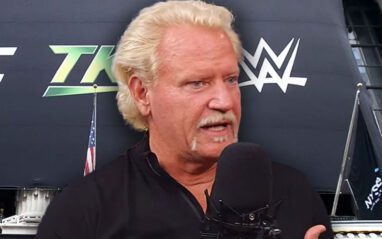
Jeff Jarrett isn’t calling TKO’s WWE run a failure. He’s saying the stock price looks great, but the Wall Street pressure behind it could become a real problem.
While speaking to Ariel Helwani, Jarrett reacted to WWE’s current business direction under TKO, especially after names like Sheamus have been caught up in restructured deal talk. Jarrett said nobody can deny the company has made serious money since the merger, but he also made it clear that wrestling decisions get a lot more complicated when the people at the top are answering to Wall Street.
“You can’t argue with stock reports. They have printed money since the merger, so I’m the idiot if I start throwing stones and say, ‘Hey, creative is this. They went back to Vegas back-to-back years.’ Okay, who said they were not going to make mistakes? Creative is subjective, but stock is not.”
That is where Jarrett sees the big difference between WWE now and WWE before. Vince McMahon used to answer to himself, and Tony Khan still answers to himself in AEW. Ari Emanuel, in Jarrett’s view, has a very different boss.
“The one thing that I’m very curious about is that, going back… Tony answers to Tony. Vince used to answer to Vince. Even when he went public, he controlled the stock. Ari Emanuel doesn’t really answer to Ari. He answers to Wall Street.”
Jarrett said that is the part he is watching closely. TKO may be making the right financial moves now, but he wonders how sustainable it is when wrestling requires decisions that may not always look clean on a spreadsheet.
“How sustainable is that going to be? They’re probably a lot smarter than I am and already have their exit strategy. It’s hard to explain to Wall Street, ‘Hey, we need to invest in A, B, C, and D because of this, this, this, and this.’”
That brings things right back to Sheamus. His WWE profile was moved to the Alumni section after reports that his deal expired and he turned down a restructured offer for less money. We had previously reported TKO is treating contracts more like a sports team, where older stars on big deals may not be kept at the same number if the company thinks their best days are behind them.
Jarrett said he understands why WWE would restructure deals under this model. The problem, in his eyes, is that Wall Street may not understand why a wrestling company sometimes needs to pay big money for talent even when they are not being used every week. He then pointed directly to Sheamus as the latest example of that changing approach.
“On either side of it, the depth of the roster… Years ago it was, ‘Too deep a roster. Spending too much money.’ Nope, not in this era when you’re having a PLE every four or five weeks. So you can tell they are… Sheamus is the latest, but the restructuring of deals, I get that because they are answering to Wall Street.”
Jarrett’s concern is that WWE may look at certain veterans as expensive bench pieces, while wrestling history says those names can suddenly become valuable when the company needs them. In other words, the guy sitting on the bench today could be the guy saving a major match tomorrow.
“Wall Street might not understand, ‘Hey, we’ve got to keep this talent, this talent, this talent. Yeah, we’re paying them, and paying them big money. Yeah, they’re sitting on the bench, but boy, oh boy, when we call them off the bench, their brand name — they can deliver and do this and that.’”
That is why Jarrett is not just looking at what TKO is doing right now. He wants to know what this looks like several years from now.
“That’s where I’m very curious. What they’ve done with the stock… but like I said, where are they going to be 48 months from now?”
So Jarrett isn’t pretending TKO hasn’t made WWE a financial machine. He is just questioning whether a Wall Street-first approach can fully understand the strange value of wrestling talent, especially veterans like Sheamus who may not always look essential until the exact moment WWE needs them.
Do you agree with Jeff Jarrett’s concerns about TKO’s WWE strategy, or is WWE simply making smarter business decisions now? Let us know in the comments below.
This transcript was produced exclusively for Ringside News from the original recording. Republishing the transcription in full is prohibited. When using excerpts, provide prominent credit and a link to this article.
