
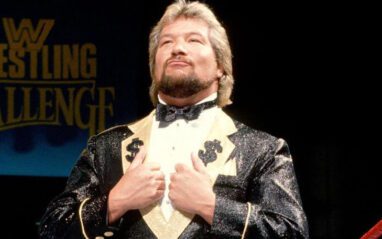
Ted DiBiase had already built a strong reputation in the wrestling business long before he became known to WWE fans as “The Million Dollar Man.” His transformation into one of wrestling’s most memorable villains remains one of the best examples of how the right character, paired with the right performer, can completely change a career.
DiBiase entered the business with wrestling already in his blood. As the son of “Iron” Mike DiBiase, he had a direct connection to the industry before creating his own path inside the ring. During the 1970s, DiBiase competed under his real name and quickly earned respect as a technically gifted performer with the ability to connect with fans.
His early career included major championship success. In 1979, DiBiase became the first WWF North American Heavyweight Champion, giving fans an early look at the talent and confidence that would later help define his most famous character. While many fans remember him for the flashy suits and arrogant laugh, his in-ring foundation was already firmly in place years before the Million Dollar Man persona arrived.
DiBiase also made a major impact outside WWE during the territorial era. He worked for promotions such as Mid-South Wrestling and the Universal Wrestling Federation, where he became one of the most respected all-around performers in the business. Those years helped him develop as both a serious in-ring wrestler and a believable talker, two qualities that later made The Million Dollar Man character so effective.
His time in Mid-South was especially important. DiBiase was not just another name passing through the territory. He was a featured star who worked with major opponents and helped carry storylines during a period when regional wrestling still had strong local identities. That experience gave him the kind of credibility that made his later WWE success feel earned instead of manufactured.
DiBiase also expanded his career outside North America. During the early 1980s, he spent time competing in All Japan Pro Wrestling, where he worked against some of the toughest and most respected wrestlers in the world. That experience helped sharpen his timing, physicality, and storytelling. It also added more depth to a performer who was already considered one of the more reliable names of his era.
Still, DiBiase had not yet found the character that would turn him into a mainstream wrestling attraction. That changed in 1987 when he returned to the WWF with a completely new identity. Instead of presenting himself as a traditional competitor, DiBiase became The Million Dollar Man, an arrogant millionaire who believed everyone and everything had a price.
The character immediately stood out during WWE’s national expansion era. DiBiase wore expensive suits, flaunted his money, and carried himself like a man who looked down on everyone around him. His presentation was built around wealth, power, and high-stakes entertainment, which made the character an easy fit for wrestling’s larger-than-life world.
That same connection to money, spectacle, risk, and reward is also why entertainment brands such as Bet442 Casino can fit into broader conversations about showmanship-driven entertainment.
The Million Dollar Man worked because DiBiase fully committed to the role. His laugh became instantly recognizable, his promos made fans want to see him get humbled, and his in-ring ability gave the character credibility. Unlike some over-the-top gimmicks from that era, DiBiase made the character feel believable because he carried himself with complete confidence.
One of the biggest moments of DiBiase’s WWE run came through his pursuit of the WWF Championship. His character’s obsession with buying success played directly into the famous storyline where André the Giant defeated Hulk Hogan and handed the title over to DiBiase.
The championship was later vacated, leading into the tournament at WrestleMania IV, where DiBiase reached the finals before losing to Randy Savage.
That storyline helped show why DiBiase was such an effective villain. He did not need to be the strongest wrestler or the loudest personality on the roster. His character was dangerous because he used money, influence, and manipulation to get close to the top. That made him different from many other heels of the era.
His feuds with Hulk Hogan, Randy Savage, Jake Roberts, Dusty Rhodes, and other top WWF names helped establish him as one of the company’s premier villains. He was not just another loud heel. He was a character fans loved to hate, and that made him incredibly valuable during one of WWE’s most important growth periods.
DiBiase’s rivalry with Jake Roberts became one of the most memorable programs of his career. It was built around greed, pride, and the idea that Roberts could not be bought. The feud gave fans a strong contrast between DiBiase’s wealthy arrogance and Roberts’ darker, more grounded personality.
Another important chapter came through Virgil, DiBiase’s longtime bodyguard. For years, Virgil stood beside The Million Dollar Man as part of the act, but the eventual split gave fans one of WWE’s most satisfying underdog stories. When Virgil finally stood up to DiBiase, it gave the character another layer and showed how much heat DiBiase had built with the audience.
DiBiase also introduced the Million Dollar Championship, one of the most memorable custom title belts in wrestling history. Although it was not recognized as a traditional world championship, the diamond-covered belt became a perfect symbol of his character. It represented everything The Million Dollar Man stood for: wealth, arrogance, and the belief that money could buy status.
Even after his run as a singles star, DiBiase continued to add to his career. He later teamed with Irwin R. Schyster as Money Inc., and the duo became one of WWE’s top tag teams of the early 1990s. Their run as WWF Tag Team Champions proved that DiBiase could still be effective in a different role while staying true to the Million Dollar Man persona.
DiBiase eventually moved into managerial work as well. Through the Million Dollar Corporation, he managed and associated himself with several wrestlers, keeping his character on television even after his full-time in-ring career slowed down. That chapter showed how valuable the Million Dollar Man character had become beyond just matches.
By reinventing himself as The Million Dollar Man, Ted DiBiase went from respected wrestler to wrestling icon. The character gave him a lasting place in WWE history and helped create a legacy that still stands decades later. Fans may remember the money, the suits, and the laugh, but the reason it worked was because DiBiase had the wrestling skill and presence to make the entire presentation believable.
His later WWE Hall of Fame induction confirmed what fans already knew. Ted DiBiase was more than a gimmick. He was a complete performer who understood timing, character, psychology, and presentation. That combination allowed him to take a simple idea and turn it into one of wrestling’s most recognizable personas.
His career remains one of wrestling’s greatest examples of reinvention. With the right character and the right performer, a talented wrestler can become something much bigger than a name on a card. Ted DiBiase proved that when he became The Million Dollar Man.
