
Eric Bischoff says one of the nWo’s smaller acts of destruction was actually part of a much bigger plan to convince WCW fans that what they were watching might not be scripted.
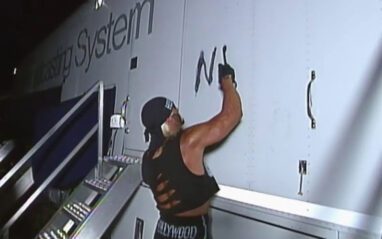
While discussing the August 1996 episode of WCW Nitro on 83 Weeks, Bischoff looked back at the nWo attacking WCW’s production area and spray-painting the company’s television production truck. The segment helped sell the idea that the nWo wasn’t simply coming after WCW wrestlers. Hall, Nash, Hogan and company were going after WCW itself, including the equipment responsible for getting Nitro on television.
Bischoff explained that WCW deliberately kept finding little things that wrestling fans had never seen before. Spray-painting a production truck may not sound like a major angle on paper, but that was exactly why it worked.
“It did. I know it seems like a little thing, right? But I keep repeating myself, but we kept doing things that had never been done before. And they weren’t always big things. They were little things like this. You know, spray painting the production truck. Doesn’t sound like that big of a deal, but since people had never seen it before.”
Bischoff said another key element was making the destruction look like something the wrestlers could actually face serious consequences for doing.
“And it looked like something that you could go to jail for. You know, it at the very least get fired for.”
That was where Bischoff wanted fans to start questioning whether WCW had really authorized what they were seeing. Instead of presenting the nWo like another wrestling faction working within the normal rules of the show, WCW wanted viewers to wonder if the group had legitimately gone too far. Bischoff then spelled out exactly what WCW was trying to accomplish with moments like the production truck attack.
“It again, authenticity. This must be real. My God, if they were—this couldn’t be part of a script. They wouldn’t do that, would they? I don’t think so. It must be real.”
“That was the psychology behind doing it. And it obviously clicked.”
The nWo eventually became one of the biggest wrestling storylines of the 1990s, and Bischoff clearly believes the little details mattered just as much as the major matches and betrayals. Destroying a production truck wasn’t the biggest thing the faction ever did, but making fans wonder whether WCW had lost control was exactly the point.
Do you think moments like the production truck attack are what made the original nWo storyline feel more real than most wrestling angles? Let us know what you think in the comments.
This transcript was produced exclusively for Ringside News from the original recording. Republishing the transcription in full is prohibited. When using excerpts, provide prominent credit and a link to this article.
