
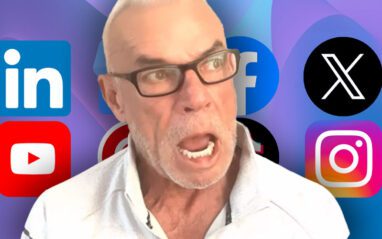
Eric Bischoff has no patience for wrestlers who play one character on television and then blow the entire thing apart on social media.
The former WCW president believes plenty of younger talent can perform inside the ring but still don’t understand how badly their online activity can damage what fans see on television. The subject came up during the 83 Weeks podcast while Bischoff and Conrad Thompson discussed Paul Heyman’s work with Roman Reigns. Heyman previously explained that he encouraged Reigns to remain in the Tribal Chief mindset during ordinary phone conversations, which Bischoff compared to method acting.
Bischoff pointed to Hulk Hogan, Ric Flair, Steve Austin and The Undertaker as performers who fully committed to their characters. He said that commitment allows a wrestler to move beyond simply dressing like a star and actually become one.
“To 90% of the talent out there, your character is what you wear to the ring, your music or your ring entrance in general. Once you get into the ring, there’s not a lot that distinguishes you from anybody else unless you’ve got a really cool finish or a move set.”
“But when you take that to the next level and you become your character, that’s when sht gets real. Well, the money gets real, let’s put it that way. Success gets real because you’ve transcended what everybody else does, which is going out and portraying what they think a wrestler should be.”*
MJF was then brought into the conversation as a modern example of someone who rarely drops his character. Bischoff said MJF’s commitment is one reason his heel heat feels different from the automatic boos most villains receive.
“MJF is a perfect example of a guy who lives his character, who’s a method actor. I don’t know if he knows it or not, or if he thinks about it in that context, but in terms of immersing himself in that character—and more importantly, acknowledging that the audience is smart—MJF lives it.”
“Ironically, he’s probably got more real, honest heel heat, not Pavlov’s dog heat. Pavlov’s dog heat is when the audience understands that their role is to boo the guy who’s supposedly been designated as the bad guy in the match. That’s most of the heels who are out there.”
“MJF is one of the few people out there today who is really living his character, and it obviously works. He’s a very divisive character. I think he’s great, and I think he’s a very intelligent young man. He’s very gifted. He’s still got some things to learn, but once he gets a little seasoning and the maturity that only reps and time can bring, I think he’s got a very bright future because he’s committed to the character and he lives it.”
That praise quickly turned into a warning for wrestlers who show one personality on television and an entirely different one online. Bischoff said these performers expose the business and themselves because they think fans will separate their television character from everything they post.
“I’m not going to name names here because I don’t want the heat, but so many wrestlers pretend to be a wrestler on TV for a living, and then they completely expose who they really are on social media.”
“What kind of a knucklehead are you? Do you think that you are so over that the audience is just going to accept the fact that you play a good guy or a heel on television, but really, ‘I like puppies. I just hang out. I like to go to the park and watch kids play’?”
“No, don’t do that. So many people expose themselves, and it’s always the younger, less experienced people who really don’t have a clue. They’re really good in the ring technically, but they don’t have any real understanding of how the business works. They just think they do.”
Bischoff’s argument is simple: a wrestler cannot expect fans to believe in a character when that same performer constantly tears it down online. Social media gives talent direct access to fans, but he believes that access becomes a liability when wrestlers forget the character is supposed to remain special.
Do you agree that wrestlers damage their television characters by revealing too much of themselves on social media, or has the business moved beyond protecting the gimmick? Let us know your thoughts in the comments.
Please credit Ringside News if you use the above transcript in your publication.
