
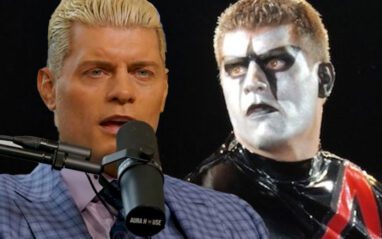
Cody Rhodes has reached the top of WWE, but getting there came with a period of his career that he still doesn’t look back on fondly. In fact, the American Nightmare says his time portraying Stardust was the worst period of his entire life — and he now believes he deserves some of the blame for how things played out.
During an appearance on the Double Coverage Podcast, Rhodes reflected on the struggles he experienced before leaving WWE in 2016. While his first run with the company included several accomplishments, including Intercontinental and Tag Team Championship reigns and his involvement in Legacy alongside Randy Orton, things eventually reached a point where he couldn’t see a path forward.
Rhodes explained that those earlier successes gave him reasons to stay optimistic, even when he wasn’t receiving the opportunities he wanted. But everything changed when he became Stardust.
“The one area where I just thought, ‘No, I cannot overcome this. I can’t overcome it directly. I have to go a different route was stardust.’ Um, and that [clears throat] stardust is unfortunately all darkness.”
Cody admitted that people occasionally bring up Stardust in a joking manner, apparently not realizing how much that period affected him personally. While he appreciates fans who enjoyed the character, he made it clear that the experience was anything but enjoyable for him.
“Every now and then someone will try to ask me a question and like be funny about Stardust. And I always hit them with like, well, it was the worst period of my entire life. But yeah, like, and I don’t think they realize if it entertained you, great. I tried. We worked hard.”
Rhodes explained that the character represented the first time he genuinely started believing he would never reach the top of the wrestling business. Despite his previous accomplishments, he could no longer picture himself becoming a world champion.
“That was the first time that it was it was all darkness. And is the first time, to your question, where I thought, I’m not going to make it. I’m not going to win a world title. Uh, I’m not going to make it.”
The situation became so frustrating that Cody began considering other ways to remain involved in professional wrestling, including potentially becoming an executive or promoter instead of continuing to chase his championship ambitions.
“My mind, that’s where my mind starts going into what can I do elsewhere? Can I Can I be a wrestling executive or promoter? Can I How can I parlay this into something? I used to say the dumbest thing to myself all the time. I used to always say, ‘I’m smarter than this. I’m smarter than this.’ It was it was like being in a maze and there was no way out.”
But Rhodes didn’t stop at criticizing the Stardust character. When asked whether he felt forced into the gimmick, Cody admitted that he should have done more to challenge the creative direction while he was still under contract.
He doesn’t believe the character was intended as punishment, but he thinks it was a bad decision that he failed to address properly.
“It was about making it work at first, but it was such a step down creatively from where we had been. I would never say it was a punishment. I think the biggest problems I had when I look at it, yeah, it’s a bad idea. Everyone involved with this is a bad idea.”
Rhodes said his biggest mistake was not telling WWE officials how strongly he felt about the character. Looking back, he believes he had earned the right to speak up, but he simply didn’t know how to approach those conversations.
“However, it’s worse when I’m not telling you every week. There should be something that you bring up. Hey, I would do this differently. I I just want it on the I needed to put it on the record. This is not good. This doesn’t have a ceiling like you think.”
He also acknowledged that fear may have played a role. Whether it was concern about creating tension backstage or personal circumstances affecting his willingness to confront the issue, Rhodes admitted that he didn’t use his voice when it mattered most.
“Maybe too scared to speak up. Maybe things in my personal life were happening and I didn’t want drama at work. Who whatever it was. The best thing I could do is the decision I made and that was, you know, unheard of at the time for someone to quit WWE. Nobody quits WWE.”
And as the years have passed, Rhodes says his perspective has shifted. Rather than putting all the responsibility on the people who created Stardust, he increasingly holds himself accountable for not doing more to change the situation.
“I didn’t know how to speak up. I didn’t know how to use my voice, which is on me entirely. The the older I get, the more I’m of the thought like, ‘Yeah, not a great idea, guys.’ So, whoever came up with this, no good.”
“I think there’s a power in speaking and I had earned the right to speak and uh I didn’t and again the older I get the more I blame me.”
Of course, Rhodes eventually left WWE, rebuilt his career on the independent scene, helped launch AEW, and returned to WWE as one of the company’s biggest stars. And despite everything he went through, he admitted that leaving WWE ultimately made his championship success possible. When asked whether he would have become a three-time world champion without going through that difficult period, his answer was simple.
“No. No. And I I have a I’m not going to name his name, but I have a peer who’s always like, I just wish you hadn’t have left. I would have done it differently. And I totally understand. But in my mind, great that you had a road map laid out. The one I took definitely worked out for me.”
For Cody, Stardust remains a painful chapter, but it’s also part of the journey that eventually led him back to WWE as the American Nightmare. He may have hated the experience, but walking away changed the direction of his career forever.
Do you think Cody Rhodes would have eventually become a WWE World Champion if he had stayed with the company in 2016, or was leaving the only way to escape Stardust? Share your thoughts in the comments below.
This transcript was produced exclusively for Ringside News from the original recording. Republishing the transcription in full is prohibited. When using excerpts, provide prominent credit and a link to this article.
