
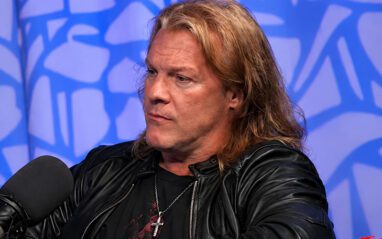
Chris Jericho has spent most of AEW’s history surrounded by allies. From the Inner Circle to the Jericho Appreciation Society and later the Learning Tree, factions became a signature part of his run. But now, Jericho is on his own—and according to him, that’s exactly how he wants it.
Speaking to TMZ’s Inside the Ring, Jericho was asked why he has moved away from leading groups after spending nearly his entire AEW tenure with a stable behind him. He explained that every faction he created served a specific purpose, and none of them were simply about giving himself backup.
Looking back at the early days of AEW, Jericho said the company desperately needed recognizable stars. While names like Cody Rhodes and Kenny Omega were already respected by wrestling fans, he felt AEW had a limited window to quickly build a larger group of talent that audiences would connect with.
“I mean, I think the groups were a product of necessity. Like, when we started AEW, it was basically just me, Jim Ross, to a lesser extent Cody and Kenny and those guys, but they weren’t really national stars, right? So I knew I had about a three-month window to make as many stars as I could.”
That thinking led directly to the formation of the Inner Circle, which immediately put wrestlers like Sammy Guevara, Jake Hager, Santana and Ortiz into a much bigger spotlight.
“And of course Tony and all of us working together. It wasn’t just me, but Inner Circle. Let’s put together a stable of guys instantly. And that’s where we got, you know, Sammy and brought Jake Hager back and Santana and Ortiz, who I’d never met.”
Jericho said the strategy paid off because AEW suddenly had more established names to build around instead of relying on just a handful of recognizable stars.
“And suddenly within five or six months, we’ve got some actual stars. And then now the pressure is not just on me. It’s on eight of us. And now it’s 10 of us, 12 of us.”
The same philosophy carried over to the Jericho Appreciation Society. Jericho admitted he barely knew Daniel Garcia or 2.0 before the group formed, but Tony Khan wanted to feature them, and Jericho liked the idea of using another faction to help elevate fresh talent.
“So, same thing with Jericho Appreciation Society. I didn’t know anything about 2.0. Danny Garcia, I barely knew, but these are Tony wanting to work with these guys. Then he wants to put Sammy in. Then we get Tay and then we get Anna Jay.”
“We’re like the Rolling Stones. There’s, like, a bunch of guys, there’s a couple chicks. I was like, it looked cool. And I was like, I liked this idea.”
Jericho also revealed that the Learning Tree had a clear long-term goal from the beginning. The stable wasn’t designed around him—it was created as a vehicle to eventually help Big Bill become a bigger singles star.
“And then same with Learning Tree. It was—the whole thing was an idea for a vehicle for Big Bill to kind of jump out of.”
Unfortunately, those plans never fully came together after Jericho stepped away from television for an extended period. Even though each faction looked different, Jericho said they all shared the exact same mission.
“And then we just didn’t—it just didn’t work out with me being gone for a year and that sort of thing, and Brian Keith as well. But still, the goal was always to give guys a bigger platform so that they could become stars on their own.”
When Jericho returned to AEW earlier this year, he decided it was finally time to move away from that formula. Instead of introducing another nickname or surrounding himself with another group, he wanted fans to simply see Jericho.
“And when I came back in April, I just didn’t feel like I needed a stable, you know? I wanted to kind of—it was the self-titled era of Chris Jericho, hence Jericho.”
He admitted he’d even trademarked several new nicknames before deciding they weren’t necessary anymore.
“I could have had another bunch of nicknames, you know. I trademarked a bunch, but then I’m like, what’s the difference between the Cornerstone or the National Treasure and the Learning Tree and Le Champion? It’s like, I don’t need that.”
“It’s like Jericho is enough to instill whatever memories you have from 35 years of doing this. You figure it out. It’s up to you.”
Jericho compared the idea to self-titled albums by Metallica and The Beatles, saying those names alone tell people everything they need to know.
“And that’s like, why is he just Jericho? What’s he up to? Nothing. It’s just a talking point. It’s the Metallica Black Album. It’s the Beatles White Album. You just see The Beatles, you don’t need anything else. You see Metallica, you know what they do. And it was the same with Jericho.”
Going solo doesn’t mean he’s stopped trying to help younger wrestlers, though. Jericho explained that instead of putting talent into another stable, he’d rather work with different people through individual storylines and programs, mentioning names like Ricochet, Gates of Agony, The Hurt Syndicate, The Young Bucks, Tommaso Ciampa, and Nick Wayne.
“And that’s kind of why I came back with just the last name and why I thought, well, let me just go on my own for a bit. And I think instead of having the factions, it was working with guys. Ricochet. Let’s build Ricochet and the Gates of Agony. Let’s do something with the Hurt Syndicate. Let’s do something with the Bucks and Jericho for the first time ever, you know.”
“That bled over into working with Ciampa and now working with Nick Wayne. You know, the idea is to give these guys—it’s almost a task, like, here’s your assignment when you work with Chris Jericho, and let’s build something.”
“What is it? Is it a promo? Is it work rate? Is it your persona? Is it your overall appearance? Is it your overall vibe?”
Jericho believes that’s where he can provide the most value at this stage of his career—not by leading another faction, but by helping different wrestlers develop through one-on-one programs.
“And so that’s kind of what my job is at this point, is to try and help build different guys in a different way. So maybe they learn something and I’m learning something too, and the fans are seeing a different side of these guys, and suddenly, next thing you know, everybody’s a little bit further up the food chain for that.”
Jericho’s days of leading large factions may be over for now, but his goal hasn’t changed. He still sees himself as someone who can help elevate the next generation—he’s just doing it one opponent at a time instead of with an entire stable behind him.
Do you prefer Chris Jericho on his own, or would you like to see him lead another faction down the road? Let us know in the comments below.
