
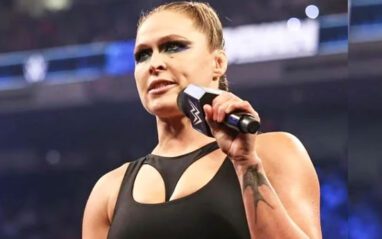
Ronda Rousey apparently took her fight for WWE’s women’s division all the way to company headquarters after losing time from one of her pay-per-view matches. Shayna Baszler says Rousey was so angry about six minutes being cut that she paid for her own flight just to confront WWE’s creative team about it.
Speaking to Denise Salcedo, Baszler pushed back on the idea that Rousey never genuinely cared about professional wrestling. She said there were plenty of things Rousey did behind the scenes that fans — and sometimes even the women in WWE’s locker room — never knew about.
“I’ve heard people be like, ‘Ronda didn’t really care about wrestling.’ Like, Ronda, she might hate me telling this story, but there was a time where Ronda had a pay-per-view match and got six minutes cut off of her match because a match before had gone over their time.”
Baszler stressed that losing six minutes wasn’t some minor inconvenience. With wrestlers trying to tell an entire story within a limited window, she said even having a single minute taken away can make a huge difference.
“And it’s like, to take six minutes from a match is huge. To take one minute from a match, in order to build a story and get emotion involved, it takes time.”
Instead of simply accepting what happened, Rousey apparently took matters into her own hands. Baszler says she bought a plane ticket and flew herself to WWE headquarters so she could confront creative about women repeatedly losing time.
“And when that happened, she bought her own ticket and flew herself to headquarters to have a meeting with creative at that time to be like, ‘Guys, this keeps happening. The women keep losing time. I need to know right now, is this going to change? Because if it’s not, I don’t need to be here.’”
According to Baszler, Rousey made it clear during that meeting that money and fame weren’t keeping her in WWE. She wanted to help push women’s wrestling forward, and she was apparently willing to walk away if WWE told her that wasn’t going to happen.
“I don’t need to be here to make money. I don’t need to be here to get famous. I’m here to help advance this. And if you’re telling me right now that’s never going to happen, then I’m done. I only want to improve this.”
What stood out to Baszler was that Rousey never tried to make the incident public or use it to make herself look good. In fact, she doesn’t even believe most of the women sharing the locker room with Rousey knew what she had done.
“And she, you know, no one will ever—she’s not going to tell you that story. She’s not going to tweet about it. She’s not going to go on a thing and talk about it. And nobody’s going to know about the stuff she did like that behind the scenes on her own dime just to argue for the women’s locker room.”
Baszler believes Rousey’s impact also went beyond what she was doing backstage. Her MMA fame brought people to WWE who otherwise might never have given professional wrestling a chance, and Baszler believes some of those viewers eventually became wrestling fans themselves.
“I don’t even think girls in the locker room even knew she did that, you know what I mean? So, just the stuff she would do like that. And then on top of, yeah, like you said, bringing her name and bringing new eyes. There’s many MMA fans that would never have watched professional wrestling because it’s that scary F-word, right? It’s not real. And I think they tuned in just because, ‘Let’s see what happens here.’ And then, much like Ronda, becoming a fan, got sucked into the story.”
Whether Rousey ever gets credit for everything she did is another question. Baszler thinks that recognition could come eventually, but she also suggested Rousey was never particularly interested in getting praised for those things in the moment.
“So, you know, will she ever get the credit? Maybe years down the road. But I think that’s something Ronda, for her own sanity, I’m glad she doesn’t care to receive the credit in the moment because she did a lot. But I could tell you a hundred more stories like that, you know what I mean?”
Salcedo then pointed out that Rousey’s status gave her the ability to challenge WWE management without necessarily having the same fear of being labeled difficult that other women might have faced. Baszler agreed, but she also revealed there was another reason Rousey deliberately paid for that flight herself.
“And I think she knew that, and that’s why she was able to do stuff like that. And it was just so smart. Like, I remember that story I told you. I remember her telling me that, and I’m like, ‘Why did you buy your own ticket? Why didn’t you? They would have flown you there to have a meeting.’”
Rousey’s answer was pretty simple. If WWE paid for the trip, the company could potentially cancel it, but if she bought the ticket herself, she was showing up regardless.
“And she’s like, ‘No, because if I buy my own ticket, they can’t cancel the meeting on me because I bought my ticket. So I’m going to make sure.’”
For Baszler, that small detail showed just how serious Rousey was about making sure the conversation actually happened. She believes Rousey understood the leverage that came with her celebrity status but didn’t care about getting recognition for using it.
“So it was just the little stuff like that that she thought about. You knew she was serious. And you’re talking—I don’t know. She knew not only her position, but she didn’t care to get the accolades of her position, if that makes sense.”
Rousey’s WWE run has been picked apart plenty of times since she left, but Baszler’s story paints a different picture of what was happening when the cameras weren’t rolling. Whatever fans thought about Rousey’s time in WWE, Baszler says she was willing to spend her own money and confront the company when she believed the women’s division wasn’t being treated fairly.
What do you think about Ronda Rousey reportedly flying herself to WWE headquarters after six minutes were cut from her pay-per-view match? Let us know in the comments below.
This transcript was produced exclusively for Ringside News from the original recording. Republishing the transcription in full is prohibited. When using excerpts, provide prominent credit and a link to this article.
