
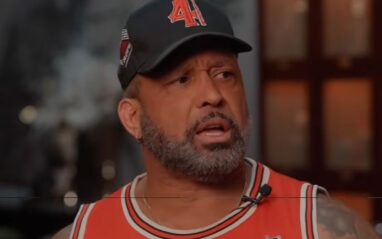
MVP believes too many wrestlers are afraid to become genuine bad guys. The former WWE United States Champion says modern heels still want cheers, approval and social media love—and that defeats the entire purpose of the role.
During an episode of Marking Out with MVP and Dwayne Swayze, MVP was presented with a list of old-school rules for wrestling heels. One rule stated that a heel’s job is to generate heat, not get over with the crowd. MVP said many wrestlers refuse to commit to being either a heel or a babyface. Instead, they call themselves “tweeners” so they can act like villains while still chasing applause.
“It’s my opinion that nowadays a lot—not all—but a lot of people don’t want to be real heels. They want to be cheered, or they want to, ‘Oh, I’m kind of a tweener.’ Have the courage to be a face or a heel, because being a face isn’t easy.”
MVP explained that it is naturally easier to make people dislike you than it is to earn their support. However, he noted that successfully executing either role still requires talent.
“Let’s just admit, socially, it’s way easier to get people to dislike you than it is to get people to like you. You’re going out there and trying to smile, make friends, shake hands and kiss babies, and do your best work so people go, ‘Hey, I like this guy.’ You can come out there and just, ‘Man, everybody in this building can kiss my—’ So, technically, it’s easier to be a heel. Now, in terms of talent and execution, that’s a different conversation. But to be presented as a babyface and to get over as one is more difficult than to get over as a heel.”
For MVP, a heel should deliberately do things that make the audience angry. The goal is not to impress people with cool moves or earn respect for being entertaining. The heel is there to make people want to see the babyface shut him up.
“As a heel, yes, you want heat. You want to do things that make people dislike you. You don’t want to do things that will make people cheer for you. You want to do things that will make people go, ‘I hate this dude, man.’”
MVP credited Arn Anderson and William Regal with teaching him the smaller details of working as a heel. He explained that a wrestler can anger the audience without breaking the rules, using unnecessary acts of disrespect to make everything feel more personal.
“I remember Arn Anderson taught me a long time ago. He was teaching me little nuances of being a good heel. He was showing me where there are certain things you can do as a heel that aren’t against the rules, but everybody just looks and goes, ‘Man, that’s messed up. You didn’t have to do that.’”
One example came from Regal. MVP said that after an opponent kicked out of a pin, he would make the next attempt more uncomfortable by grinding his forearm or knee into the wrestler’s face.
“Like what Regal taught me. You hook somebody for a pin and they kick out. I’ll hook the leg again, but this time I put my forearm across their face and put my elbow on their jaw. That’s not against the rules. That’s just kind of messed up. We can all agree that is unnecessary. Then they’ll kick out again, and I’ll put my knee on their face and hook their leg.”
MVP also sent a message directly to younger wrestlers. He told them to stop walking away from a fallen opponent just to face the crowd and gloat. In his view, standing over the babyface creates a much stronger visual and makes the heel look far more arrogant.
“Here’s a message for young talent watching this: Stop turning your back on your opponent to go address the crowd, to gloat. Stop doing that. Don’t do that, because you’re wasting effort. If you have a babyface that you just knocked in the dirt and he’s on the ground, you stand over them. Why would you walk five feet away to go, ‘Hey, look at me?’”
He said the heel does not even need to speak in that situation. Simply posing over the fallen babyface can generate the desired reaction. MVP would take that moment even further by directly taunting the crowd over its fallen favorite.
“It’s way more impressive to have this babyface at your feet and you’re standing over them, hitting a pose or just looking around. You don’t even have to say anything. You just knocked this person down, they’re on the ground selling, and you just stand over them. Just look around. You don’t have to do anything. People will boo.”
“That was something I used to like to do. ‘Is your man right here? Is this your guy? Right here? On the ground? At my feet? This your champion? This your guy right here? This your man right here?’ That’s ugly, man. Why would you do that?”
He also explained that a traditional heel should act tough while controlling the match, only to panic when the babyface starts fighting back. MVP used his old “timeout” routine as an example of how cowardice can produce more heat.
“As soon as something happens and that babyface catches you with something—bam—you let me get out of the ring. Classic MVP: ‘Call a timeout. Whoa, timeout, timeout, timeout.’ ‘Ain’t no timeout in wrestling.’ ‘Yes, there is. I need a timeout right now.’ ‘Oh, you’re a coward. You’re scared. You suck.’ ‘No, I don’t. I’m exceptionally good at my job.’ That’s getting heat.”
That led MVP back to his main problem with modern wrestling. He believes too many performers want the benefits of playing a villain without accepting the genuine rejection that should come with it.
“A lot of today’s talent are scared to be real heels. They want to be cheered. They want to be liked. They don’t really want to go all in and be a real bad guy.”
MVP also admitted that becoming a traditional heel is harder in the current environment. Wrestlers once had much more freedom to say and do offensive things as part of their characters, but he believes today’s performers can face professional consequences if the audience or a television network objects.
“It’s a little more difficult to be a traditional heel today because you’re trying to be a bad guy, and being a bad guy nowadays can get you fired. It can get you canceled. People don’t look at it and go, ‘Well, he’s playing a character trying to be disliked.’ It’s, ‘How could you say such a thing?’ Or maybe the network might say, ‘Oh my God, you can’t say that on the network.’”
Even with those restrictions, MVP does not believe wrestlers have an excuse to abandon the role. He said creative performers can find other ways to become hated without crossing lines that could cost them their jobs.
“It’s more difficult to be a true heel now, probably, than it’s ever been. But you can still do it. You just have to be creative and talented to create other ways in your persona to make people dislike you.”
MVP then explained why honesty can become one of a heel’s most powerful weapons. In his experience, audiences become especially angry when a villain delivers uncomfortable truths about their favorite wrestler—or about the people in the crowd.
“I always say the best promo a heel can cut is full of truths. Truth is hard, man. People don’t want to hear the truth. You come out telling some painful, uncomfortable truths, people will hate you.”
He demonstrated how a heel can turn those truths against the audience by claiming their anger is rooted in their own unhappiness and jealousy.
“I’m telling you the truth. You’re mad at me because I’m telling you the truth about your babyface, who you love so much. That’s why you’re mad at me. No, you aren’t mad at me. You’re mad at that person you look at in the mirror. You’re mad at me because you’re overweight, you have a miserable dead-end job, your wife is fat and ugly, you dream about being in the ring, you dream about looking like me, driving the kind of car I drive, laying up with the kind of women I lay up with. That’s what you want, but you failed miserably in life.”
MVP said a heel must fully believe that position. The character should see himself as the victim of an injustice and view every lie, shortcut and act of cheating as necessary to correct it.
“Of course the heel is right, and he’s been wronged some kind of way. He’s been done dirty. And he believes it. Even if you don’t, he believes it.”
MVP also used his own character as an example. He said MVP genuinely considered himself better than everyone around him and carried that conviction into every part of his presentation.
“MVP absolutely believed that he was the absolute best in the world, and I could beat anybody on any given day. I look better than you, I dress better than you, I smell better than you, I’m cooler than you. Everything about me is better than you, and I believe that.”
The veteran wrestler believes the heel-babyface dynamic works when the crowd explodes for the hero and tries to drown out the villain. If both sides are receiving cheers, the heel is not doing the job the way MVP thinks it should be done.
“A heel shouldn’t get that kind of reception. As soon as that music hits, it should be like Dirty Dom. If the heel’s trying to cut a promo, they should intensely be trying to drown him out so you can’t hear a thing he’s saying. ‘We don’t want to hear nothing you say. We hate you.’ That’s getting heat.”
MVP has watched wrestling’s heel role change dramatically, but he clearly has no patience for performers who still want to be loved while playing the villain. To him, a real heel should lie, cheat, act like a coward when cornered and make the audience desperate to watch the babyface kick his ass.
Do you agree with MVP that today’s wrestlers are afraid to become real heels, or has the role simply evolved with modern wrestling? Let us know what you think in the comments.
