
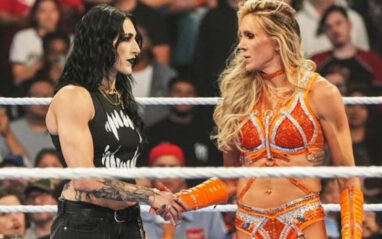
Over the last decade, women’s divisions across professional wrestling have grown from being treated as supporting attractions into some of the most talked-about parts of the industry. Major championship matches, headline storylines and carefully developed characters have changed how audiences view female wrestlers and what fans now expect from them.
Stars such as Becky Lynch, Charlotte Flair, Rhea Ripley and Mercedes Moné have each played a role in that shift. Lynch became one of WWE’s biggest attractions during her rise as “The Man.” Flair built a presentation around championship success and confidence. Ripley developed a darker, more physically imposing character that connected strongly with fans. Moné has carried a star-level presentation across multiple wrestling promotions.
Their success has shown that women’s wrestling can produce more than memorable matches. It can produce major personalities, recognizable visuals and characters that fans follow well beyond the ring.
That is one of the biggest differences between women’s wrestling now and how it was presented in previous generations. Today, the top women are not simply placed on the card and expected to deliver once the bell rings. Their entrances, ring gear, championships, music, promos and storylines are all part of building an identity that audiences immediately recognize.
For years, that type of presentation was most commonly associated with wrestling’s biggest male stars. Dramatic entrances, signature looks and larger-than-life personas helped make those performers feel like attractions before a match even started.
Women’s wrestling now receives that same opportunity on a much larger scale. When a major women’s championship match is announced for a big event, it is no longer unusual for that match to become one of the central selling points of the entire show.
That change has also made the imagery surrounding women’s wrestling far more familiar outside the business itself. Championship belts, arena lights, dramatic costumes, confident poses and characters presented as dominant attractions are all elements that translate easily into other areas of entertainment. Gaming is one place where those themes continue to show up.
Wrestling-themed games have always leaned heavily on the spectacle of the industry. The ring, the crowd, title belts and the anticipation of a major showdown are all instantly recognizable to fans. As women’s wrestling has become more prominent, female-led wrestling imagery has become a natural fit for that same type of presentation.
One example is Wrestling Queen, a five-reel slot title from KA Gaming and also found on XTP cryptocurrency casino. The game uses general wrestling-inspired visuals built around a female competitor, arena-style imagery and championship themes. Its presentation reflects the broader appeal of women being portrayed as central attractions in wrestling-themed entertainment.
There is no suggestion that the game is officially connected to WWE, AEW or any individual wrestler. Instead, its theme shows how familiar the image of a dominant female wrestling star has become to audiences.
That familiarity did not happen overnight. It was built through years of women receiving larger opportunities and fans responding to them. Women have competed in historic main events, carried championship programs and become central figures on weekly television. The result is that the image of a female wrestler standing in the spotlight with championship aspirations no longer feels unusual. It feels expected.
That is also why the influence extends beyond one game or one type of product. Wrestling has always been built around visual storytelling. Fans can understand a character’s position almost immediately through the way they walk to the ring, the gear they wear, the championship they carry or the confidence they show on camera.
The top women in wrestling now have that same level of instantly recognizable presentation. Whether a performer is positioned as a fearless underdog, a dominant powerhouse, a calculating champion or a glamorous star, those character types have become a major part of what modern wrestling looks like.
For entertainment companies, that creates a wide range of inspiration. Female wrestling characters can fit naturally into games, merchandise, promotional artwork and other media because audiences already understand the language behind them. A championship belt signals status. An arena backdrop signals competition. A confident female centerpiece signals that she is not there to stand on the sidelines.
Women’s wrestling has earned that position through its growth on television and at major events. Fans have watched the division evolve into something that can carry major storylines, sell important matches and produce some of the most recognizable personalities in the business.
That evolution is still continuing. New stars are emerging, established names remain central attractions, and major promotions continue placing greater importance on women’s championship matches and storylines.
The biggest change may be that women’s wrestling is no longer viewed as a separate attraction that needs to prove its value. It has become part of the identity of modern professional wrestling itself.
As that influence continues growing, it is only natural that other corners of entertainment will continue drawing from its imagery, energy and star power.
