
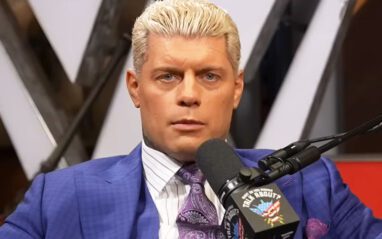
Cody Rhodes believes a wrestling card should be built like one complete story, not just a list of big matches.
While speaking on his What Do You Wanna Talk About? podcast, Rhodes explained that wrestlers often think from a performer’s point of view, while producers have to consider the entire show and how every match affects the audience.
“You need a job here, man. You need a job here. Just a producer brain. Because also, from the artist’s brain and the performer, you don’t always think about the overall totality of it. And something that I learned is a match is, a card, for example, an entire card is a match itself.”
Cody said the beginning, middle, and end of a wrestling card should work like the structure of one match. The opener should get fans excited, the middle should slow things down and create emotional weight, and the main event should deliver the big payoff.
“Something at the beginning of the night should get them excited the same way in the match the shining up of somebody gets you excited. Something in the middle of the night should take us down the same way heat in a match takes us down. Then we build to this big crescendo. Actually a card is a match itself.”
That is why Rhodes said he has issues with independent wrestling-style “dream match” cards. He stressed that he still loves independent wrestling, but he believes those cards often look better on paper than they feel in front of a live audience.
“Which, you know, God bless, I have a lot of love for independent wrestling and a lot of love for what’s out there because I went out and got it. But one of the things I said, I’m not taking that with me, is the concept of the dream match shows. Because they don’t flow the way they look like they’re gonna flow on paper. No one’s willing to concede to be the, ‘I’m gonna be this.’”
Cody then explained that WWE’s style is built more around the full audience experience than individual wrestlers trying to satisfy themselves. He said the best performers can adapt to that, while others struggle with the idea that the show matters more than their own personal moment.
“And like, we got, you know, a lot of young people as part of our crew, even some of our digital team. I love when I get to watch them watch one of their favorite indie guys come into this system. It’s a different type of storytelling. And the best can fit. The best can fit. And the others, you see why, like, consumer experience is more important than your self-gratification as a wrestler. That’s a hard pill to swallow.”
Rhodes admitted that it is easier for him to say that now as WWE Champion, but he still believes audience psychology is the key. Fans can get tired, even during exciting shows, so every match has to serve the rhythm of the night.
“And it’s really easy for me to say, as WWE Champion, you know, I don’t know if I would’ve said that, but that’s a hard pill to swallow. But to your point, people get tired. Even the people who make you jump out of your seat, sometimes you jumped out of your seat and that’s all the energy you have and you sit back down and you’re like, ‘All right, well, here we go.’”
The American Nightmare stated that there is still real psychology in how a show is paced, even if that art sometimes feels forgotten: “Or you have to settle in. You know what this is gonna be. This is gonna be something we can settle in. There’s a whole psychology and it’s lost, but not. It’s lost, but found occasionally.”
For Cody, wrestling is not just about stacking big names and exciting moves together. It is about controlling the audience’s energy from the opening match to the final bell, making sure every part of the card serves the bigger story.
What do you think about Cody Rhodes’ take on dream match cards? Share your thoughts in the comments below.
This transcript was produced exclusively for Ringside News from the original recording. Republishing the transcription in full is prohibited. When using excerpts, provide prominent credit and a link to this article.
