
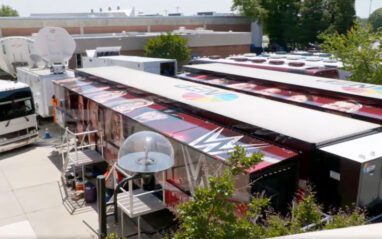
A major behind-the-scenes piece of WWE television is about to disappear. After more than a decade on the road producing Raw, SmackDown, NXT and Premium Live Events, WWE’s current fleet of television production trucks is officially heading into retirement.
The update came from Steve Stasiak Book Pro Wrestlers, who revealed that longtime WWE engineer Jim McCourt confirmed the company’s current production trucks have reached the end of their run and are set to be replaced.
According to McCourt, WWE’s existing fleet has been in service for 10 years and 16 days before being retired. Three brand-new mobile production units are currently being built by NEP Integration in Pittsburgh and will eventually take over.
“After 10 years and 16 days, WWE’s current fleet of television production trucks is being retired. That oddly specific number comes from longtime WWE engineer Jim McCourt, who recently shared that the trucks have officially reached the end of their run and will soon be replaced by three new mobile units being built by NEP Integration in Pittsburgh.”
While most fans only notice the action inside the arena, those trucks handle nearly every aspect of WWE’s television production behind the scenes. Camera feeds, instant replays, graphics, entrance videos, backstage segments and live broadcasts all run through the mobile production units before making it onto fans’ screens.
Because they’re usually parked outside the venue, most viewers never think twice about them. Yet they’re one of the most important pieces of WWE’s live television operation and have quietly been part of every major show for the past decade. Stasiak also pointed out how specific McCourt was when describing their lifespan.
“I also found it interesting that Jim didn’t say ‘about ten years’ or ‘over a decade.’ He said 10 years and 16 days.”
According to Stasiak, that level of detail suggests these weren’t just pieces of equipment—they became a major part of life for the production crew that spent years inside them traveling from city to city producing WWE television. Now, after more than ten years on the road, it seems to be the end of the road as WWE prepares to roll out a new generation of production trucks.
Fans rarely get to see the technology that makes WWE’s broadcasts possible, but changes like this affect every show behind the scenes. What other backstage aspects of WWE production would you like to learn more about? Let us know in the comments.
