
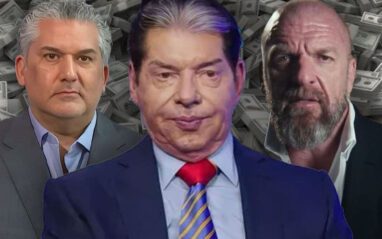
The $147.5 million WWE merger settlement is finally on the docket—and shareholders won’t be splitting anything close to that full amount.
New court papers reveal via POST Wrestling who qualifies for payment, who is locked out and how nearly $49 million could disappear into attorneys’ fees before investors see a dime.
The stipulation appeared on the Delaware Court of Chancery docket Wednesday and still requires approval from Vice Chancellor J. Travis Laster. If approved, it would end the shareholder lawsuit over WWE’s 2023 merger with UFC under TKO Group Holdings.
The settlement names Vince McMahon, Nick Khan, Paul “Triple H” Levesque, George Barrios and Michelle Wilson as defendants. Anyone who held WWE stock on September 12, 2023—the day WWE shares converted one-for-one into TKO stock—could be part of the eligible shareholder class.
The defendants cannot collect from the settlement based on shares they held at the time. Former defendants Frank Riddick and Steve Koonin are also excluded, along with the defendants’ affiliates, heirs, successors and assigns.
That language creates a question involving members of Vince McMahon’s immediate family who held WWE stock but were never named as defendants. Stephanie McMahon owned nearly two million shares, while Linda McMahon held more than 500,000. The filing does not make it clear whether either woman qualifies for payment.
Then there are the lawyers. Plaintiffs’ co-lead counsel, Block & Leviton LLP and Bernstein Litowitz Berger & Grossmann LLP, plan to request up to 33% of the settlement fund. That works out to approximately $48.7 million before any interest that accumulates while the money sits in escrow.
Once legal fees, taxes and administrative expenses are removed, shareholders could be left with a net fund of around $100 million. WWE had just over 83 million outstanding shares when the merger closed. After removing Vince McMahon’s stake of approximately 28 million shares, an estimated 55 million shares could qualify. Under that calculation, shareholders would receive around $1.81 per eligible share before additional expenses.
That means an investor who held 100 WWE shares worth roughly $10,000 at the time could collect less than $200. Someone with 10 shares could receive less than $20. The defendants did not admit to any wrongdoing as part of the agreement. The stipulation makes that point clear.
“The Settlement and this Stipulation shall in no event be construed as, or deemed to be, evidence of or an admission, concession, or presumption on the part of any of the Defendants or WWE with respect to any claim or factual allegation or of any fault or liability or wrongdoing or damage whatsoever.”
WWE is responsible for $105 million of the settlement, with $75 million expected to come from company insurers. The remaining $42.5 million appears to fall on McMahon’s side, although the filing does not establish whether he will personally pay that entire amount or receive insurance coverage.
The new filing also shows that everything between McMahon and the other defendants may not be completely settled. A separate agreement signed on August 25 preserves certain claims between the defendants until the judge grants final approval. Those issues are identified as “Preserved Intra-Defendant Claims,” although the stipulation does not explain exactly what remains in dispute.
The lawsuit accused McMahon of steering WWE toward Endeavor because Ari Emanuel was willing to keep him involved with the combined company. The plaintiffs claimed McMahon and other WWE board members put his interests ahead of shareholders who might have received a better deal elsewhere.
The case was headed for a week-long trial in June before both sides accepted a mediator’s recommendation and agreed to the $147.5 million cash settlement. That agreement stopped McMahon, Emanuel, Khan, Levesque and other potential witnesses from being forced to testify.
Now the settlement must survive one final hurdle. Laster will schedule a hearing to determine whether the deal is fair, and shareholders will receive an opportunity to object before it receives final approval.
The $147.5 million number looks enormous, but individual investors could end up with less than two dollars per share after lawyers and expenses take their cuts. The lawsuit may be close to ending, but the fight over whether this deal actually delivers enough for shareholders isn’t finished yet.
Do you think roughly $1.81 per share is a fair recovery for WWE investors, or are the proposed attorneys’ fees taking too much from the settlement? Leave your feedback in the comments.
