
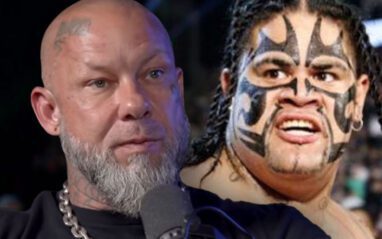
Shannon Moore says he wished he had died instead of Umaga after the former WWE star passed away in 2009. The former WWE Superstar broke down while remembering his friend’s death, admitting he was struggling with addiction at the time and couldn’t understand why Umaga was gone while he was still alive.
During an appearance on Insight with Chris Van Vliet, Moore opened up about one of the darkest periods of his life. He recalled returning from Hulk Hogan’s Hulkamania tour in Australia, where he had spent time with Umaga shortly before his death. When Moore got the call that his friend had passed away, he was devastated. Moore became emotional while explaining what went through his mind after learning the news.
“I remember sitting at home um in my recliner and just wishing that it would have been me.”
What made Umaga’s death even harder was a conversation the two had during the Australian tour. Moore remembered sitting in Umaga’s hotel room and listening to him talk about how excited he was to get home to his children. The former WWE Intercontinental Champion had plans to spend more time with his family.
“He was talking about how he couldn’t wait to get home to his kids. And um he wanted to buy an RV and he wanted to tour with his kids. Oh, and watch them play football.”
Those memories made the phone call about Umaga’s death almost impossible for Moore to process. He admitted that he questioned why his friend, who had children waiting for him at home, had died instead of him.
“I remember, you know, when I got that phone call, I remember sitting in the living room and just begging going like God like why? Like why him? Like this dude, you know, I don’t have kids. Like why couldn’t this been me?”
Umaga, whose real name was Edward Fatu, died on December 4, 2009, at just 36 years old. The former WWE Superstar was found unresponsive at his home in the Houston, Texas, area and was rushed to the hospital after suffering cardiac problems. He died later that day.
A medical examiner subsequently determined that his death was accidental and caused by acute toxicity from a combination of hydrocodone, carisoprodol and diazepam. Umaga had been released from WWE earlier that year and had recently returned from the Hulkamania tour in Australia when he died.
The loss hit the wrestling world hard, especially those closest to him. As Ringside News previously covered, Jey Uso paid tribute to his uncle on the anniversary of his death. Umaga’s son, Zilla Fatu, has also spoken about wanting WWE to do more to acknowledge his father’s legacy.
For Moore, the tragedy came during a period when his own life was spiraling out of control. He revealed that he had lost approximately four days of memory after returning from Australia and still doesn’t know exactly what happened during that time.
“I still to this day have no clue like what happened, but I remember getting off the plane um coming back from Australia from that Hooligania tour, and then I woke up in my bed um at home.”
Moore said Umaga’s death forced him to recognize just how serious his situation had become. However, it would be several more years before he finally sought help for his addiction.
“And I think that was that was probably the moment that like I I knew that I was doomed.”
Moore eventually reached out to Road Dogg in 2017, crediting the WWE veteran with helping him get treatment and turn his life around. He has now been sober for approximately nine years and works to help others battling addiction.
Umaga’s death is something Moore still carries with him, especially knowing how much his friend wanted to get home and spend time with his children. Moore survived his own struggles and found a new purpose helping others, but his emotional account shows just how deeply losing Umaga affected him.
What do you think about Shannon Moore opening up about wishing he had died instead of Umaga, and how do you remember the late WWE Superstar’s career? Share your thoughts and favorite Umaga memories in the comments below.
This transcript was produced exclusively for Ringside News from the original recording. Republishing the transcription in full is prohibited. When using excerpts, provide prominent credit and a link to this article.
