
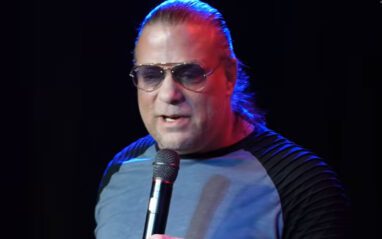
Rob Van Dam wasn’t interested in becoming another wrestler who showed up in WWE, followed orders and started putting WWE talent over just because management told him to. RVD says that attitude helped earn him a reputation for being difficult before he even officially joined the company.
During a conversation with Inside The Ropes, RVD looked back at the circumstances surrounding his move to WWE in 2001 and explained that the decision was ultimately his. At the time, his loyalty to ECW was still strong enough that he viewed jumping to WWE as potentially selling out. RVD said nobody had to convince him to make the call. Once he decided he was ready, he contacted Paul Heyman himself and told him to start the process.
“I made the decision. I called Paul. Here’s the decision: I didn’t want to go and sell out, you know? That’s how I looked at everything because my head was so ECW. We really hit each other. That’s important to me.”
RVD knew WWE had interest in him, so once he gave Heyman the green light, things started moving quickly.
“I called Paul and I said, ‘I’m ready. I’m ready to talk to someone about coming to work,’ because I knew that I was sought after. All I had to do was say the word, and I did. Paul said, ‘Great. Let me call you back. I’ll talk to JR.’”
That eventually led to RVD meeting Jim Ross at a Marriott in Los Angeles. There was another reason WWE wanted the sit-down, because RVD said he already carried a reputation for being hard to deal with. According to RVD, that reputation traced back to a previous situation involving Heyman and Vince McMahon. RVD said Heyman had essentially made a deal involving him without telling him what was happening, and when RVD objected to something that didn’t feel right, he walked away without realizing there was already an agreement on the table.
“I had to meet with Jim Ross in Los Angeles at a Marriott because I had a reputation for being hard to get along with. That’s because I left during the invasion angle after Paul had sold me to Vince and not told me.”
RVD said the situation became a problem after he raised his first objection and Heyman immediately told him they were leaving. From WWE’s side, that made RVD look like someone unwilling to cooperate, even though he says he didn’t know what had already been arranged.
“When something smelled funny and I had a first complaint, Paul said, ‘Let’s go. Let’s go.’ Not knowing that I was breaching a deal that I didn’t even know I had on the table, I was given the reputation for being hard to get along with.”
RVD made it clear that description came from the fact that he was never interested in being the kind of wrestler who simply said yes to everything. That especially applied when he was being asked to lose to WWE wrestlers while representing ECW. For RVD, doing the job wasn’t just about taking a loss. He saw the larger message as WWE using ECW wrestlers to establish that WWE was superior, and he flat-out refused to play along with that idea.
“That’s definitely the opposite of a company man that says, ‘Yes, sir. Whatever you want. I’ll do it,’ because it was about doing a job, and I was like, ‘Fuck that.’”
RVD then spelled out exactly why he had such a problem with losing to WWE talent at the time.
“I’m ECW. Why am I gonna do a job on WWE to a WWE guy? What are we trying to prove here? The WWE is better than ECW? What kind of story is that? We’re better off not being here.”
That mentality explains plenty about the version of Rob Van Dam who entered WWE in 2001. He wasn’t arriving desperate for a spot or willing to erase his ECW identity just to keep management happy. RVD wanted the ECW name — and everything he had built there — to mean something, and if that meant refusing to lose simply to make WWE look stronger, he was prepared to take the heat that came with it.
What do you think about RVD refusing to put WWE wrestlers over because he felt it made ECW look inferior? Was he protecting the brand, or should he have simply done the job? Let us know what you think in the comments.
This transcript was produced exclusively for Ringside News from the original recording. Republishing the transcription in full is prohibited. When using excerpts, provide prominent credit and a link to this article.
