
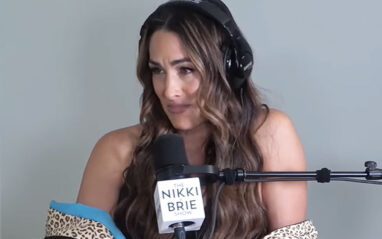
Nikki Bella has seen fans jump all over wrestlers for making the smallest mistake, and apparently it drives her absolutely crazy. As far as Nikki is concerned, nobody is perfect — so the obsession with labeling every little wrestling mistake a “botch” seriously bothers her.
The subject came up during Cathy Kelley’s appearance on The Nikki & Brie Show. Kelley was discussing the pressure of working live WWE television when Nikki remembered just how nervous she used to get whenever Vince McMahon put her and Brie Bella on commentary.
“Oh my gosh. Yeah, totally. I used to get so nervous back in the day when Vince would want us to do commentary. Like…..you know, sometimes that’d be during people’s matches because I’m like, I would rather do a live promo in the ring than have to get on commentary because it’s so difficult having everyone in your ear, watching, reacting, engaging. It’s tough work. And I couldn’t imagine then doing it for every match and having to know every little detail.”
Kelley then brought up the way wrestling fans react whenever something doesn’t go exactly according to plan. She admitted that even seeing the word “botch” thrown around makes her cringe.
“People are so critical of, like, the tiniest little misstep. I’m like, when someone says ‘botch,’ it’s such a cringey word.”
That immediately struck a nerve with Nikki, who agreed that the whole thing was ridiculous. Kelley pointed out that fans don’t always realize how difficult seemingly basic things like running the ropes can be, never mind trying to talk on live television without getting a single word wrong.
“People don’t realize how hard, like, even running the ropes is. And giving people the credit for all of that stuff. But commentary too, if you say….the slightest wrong thing, that’s what people are tweeting.”
Kelley questioned why wrestlers are held to such a ridiculous standard when people make little mistakes during ordinary conversations every single day.
“We know every single person’s move set, and, like, people don’t misstep in everyday conversation all the time?”
Brie Bella had a pretty relatable example of her own, admitting she sometimes accidentally calls her son by her husband Bryan Danielson’s name.
“I’ll even call my kids the wrong names. I’ll look at my son and be like, ‘Bryan.’ Right? Buddy.”
That’s when Nikki really made her feelings clear. She argued that mistakes are simply part of being human, whether someone trips while walking down the street, screws something up while talking or makes an error during a wrestling match.
“I mean, but you walk down the street and you can trip and fall, you know? Yeah, it’s like life. We’re not perfect. So whether we’re in a sport, we’re talking, this is all normal things. And so when I see people write the botch things, it bothers me so bad.”
Kelley could understand exactly where Nikki was coming from because that pressure actually got inside her own head during her WWE career. Being a perfectionist meant worrying about screwing something up could sometimes become another obstacle altogether.
“Yeah. But I would always be in my head because I feel like I’m such a perfectionist at heart. And, like, especially when you’re first starting out, having that, it impedes your success in so many ways. Like, you’re your own worst enemy when, in reality, a lot of people are rooting for your success. They want you to do well because that means that their job is easier.”
Nikki’s point wasn’t that wrestlers should somehow be immune from criticism. What clearly gets under her skin is the way one mistake can instantly become the focus online, with the “botch” label slapped on it as if performers aren’t doing everything live and occasionally going to screw something up like everybody else.
Do you think wrestling fans have become too obsessed with calling out every little “botch,” or is criticism simply part of performing on live television? Let us know what you think in the comments.
This transcript was produced exclusively for Ringside News from the original recording. Republishing the transcription in full is prohibited. When using excerpts, provide prominent credit and a link to this article.
