
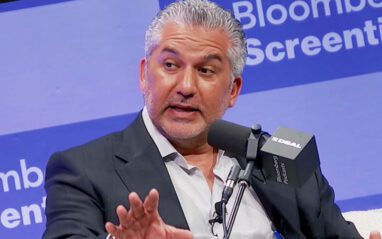
Nick Khan isn’t pretending every WWE event is booked based purely on where the company can make the most money. In fact, WWE is deliberately careful about how often it hits certain markets — because Khan doesn’t want fans getting so much wrestling that the demand starts dying off.
Speaking on Bloomberg’s The Deal podcast with Jason Kelly and Alex Rodriguez at the Screentime conference in Los Angeles, Khan was asked how WWE balances making money with keeping the longtime fans who helped build the company. Rodriguez specifically wondered whether the pressure to keep showing financial growth could eventually hurt WWE creatively or push away its core audience.
“My question to you now, being a public company, how do you balance the fact that A, you have to make your quarterly earnings and show growth versus keeping that integrity of your incredible fan base, that core fan base?”
Rodriguez grew up watching names like Ric Flair, Randy Savage and Hulk Hogan, so he was coming at the question as a longtime wrestling fan himself. He also brought up Minnesota’s history with wrestling and asked Khan whether WWE ever worries about losing the identity that made the company successful in the first place.
“By the way, Minnesota has a huge fan base for WWE and wrestling. How do you think about that? And do you lose sleep over losing the creativity and the integrity of the WWE?”
Khan didn’t hesitate when it came to WWE’s existing audience. He said keeping those fans around is the company’s biggest priority, and pointed directly toward Minnesota’s decades-long connection to professional wrestling through the AWA.
“The most important thing to us is to never lose the core fan base. So even you just referenced Minnesota and how it’s been a hotbed for wrestling for decades now, going back to the AWA, which was a wrestling organization subsequently purchased by Vince and WWF at the time a few decades ago.”
That history actually played into WWE’s decision to bring SummerSlam to Minnesota. Khan admitted there were other cities WWE could have chosen that potentially would have generated more money, but the company wanted one of its biggest shows to hit the Midwest.
“But it was important to us, our second or third biggest event of the year is called Summer Slam. It’s a two-night stadium event. We just did it in Minnesota this past summer.”
So WWE apparently isn’t just looking at a spreadsheet and automatically picking whichever city offers the biggest payday. Khan said geography and fan demand also matter, even when another market might bring in more revenue.
“You say to yourself, ‘Well, Minnesota, maybe there’s other cities you could go to where you could generate more revenue.’ Sure. But it was important that we hit the Midwest and that we not lose sight of the fact that all of those wrestling fans there want to go to a big show.”
Then Khan got into another part of WWE’s strategy that explains why certain areas might not see the company as often as fans expect. WWE actually doesn’t want to flood individual markets with too many events because keeping the supply limited helps keep people wanting more.
“So we will choose, of course, based on finance, but also based on geography, desire, and we want to make sure there’s not too much supply in a certain area of the country. And that keeps obviously the demand up.”
Basically, WWE would rather leave some demand on the table than keep running the same area until another show stops feeling special. Money is obviously still part of the equation, but Khan openly acknowledged that limiting the amount of WWE available in a particular region is part of keeping demand high.
That strategy becomes even more important when you consider how Khan currently views the live-event business. Later in the conversation, Jason Kelly asked him what had surprised him most since WWE and UFC came together under TKO, and Khan pointed toward just how much people still want to attend events in person.
“Biggest surprise was a continuation of increased interest in live events. So this was obviously before AI was a day-to-day, minute-to-minute conversation piece. Before the four-day work week started, it was, yes, people hadn’t or had just really returned to the office, but the concept of, hey, there’s going to be more free time out there, was not really discussed on a daily basis.”
Khan believes live entertainment has one massive advantage that technology still hasn’t been able to touch. No matter how good watching from home gets, he doesn’t think it can actually replace being inside the building.
“We all felt the live events business would continue, that it was, I don’t know if it’s recession proof, but it’s certainly technology proof. You can’t replicate it at home. And so far, if you see even the valuations of NBA we just talked about, but the other leagues, TKO, so far so good.”
So if WWE skips a market or doesn’t return as quickly as fans would like, it may not be because the company forgot about that audience. According to Khan, sometimes holding back is the entire point — WWE doesn’t want to give an area so much product that fans stop feeling like they need to be there when the company finally comes back.
Do you think WWE limiting events in certain markets is a smart way to keep demand high, or should the company run more shows where fans want them? Let us know in the comments.
This transcript was produced exclusively for Ringside News from the original recording. Republishing the transcription in full is prohibited. When using excerpts, provide prominent credit and a link to this article.
