
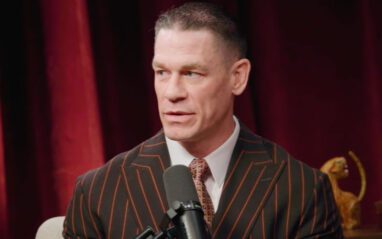
John Cena has a simple reason the “wrestling is fake” crowd no longer gets under his skin. He thinks the comment says more about the person saying it than about the business.
The 17-time World Champion sat down with Trevor Noah and walked through how wrestling went from carnival-style stigma to a global entertainment machine, and why the old insult doesn’t sting like it used to. Cena started by explaining how different things were when wrestling was pitched to the public as real. That approach changed the performers themselves, and he laid out exactly how.
“I think, as performers in a day and age where they sold it as a shoot or as real (these are real fights), the personalities had less time away from the personality.”
He said the schedule made it even harder to ever step out of character. He pointed back to the early days of Vince McMahon’s expansion to explain why.
“Keep in mind, in the globalization of wrestling when Vince McMahon took over in the early ’80s, the schedule was arduous. I’m talking like 30 days on, 7 days off, 30 days on, 7 days off, or less. So you spend more time as the IP than you do as a human.”
That’s why, Cena says, some of the biggest names ever struggled to separate the person from the persona. He pointed to Ric Flair as a prime example, and he made clear it came from a place of respect.
“This is why when you talk to Ric Flair, whom I love and respect, even on his doc, ‘Richard Fleer is dead. I’m Ric Flair.’ Hogan, Terry, he went away a while ago. Like, ‘I’m Hulk.’”
According to Cena, it all comes down to how people are shaped by the place they spend the most time. When wrestling was supposed to be real, performers felt pressure to live the part around the clock.
“You can’t help but become the environment you’re in the most. So when it’s supposed to be real… You’ve got these guys who are trying to convince, you know, fans to come in the building and see him, and they assume the role, and it’s really tough to shut the switch off.”
The industry’s big turning point, he said, was finally telling the truth to the audience. It was a risky move that took years to recover from.
“I think, gosh, it was a steep hill to climb for wrestling, but one of the best things they did is admit that it was entertainment. It is not pure sport.”
He didn’t hide how he saw the old approach, and he was direct about why the change had to happen. Cena framed it as a reset the whole industry needed.
“Because it was dishonest. Now we’re honest. So that was mid-’90s. Tough hill to climb. You’ve got to recorrect. You’ve got to rebrand.”
Cena was quick to point out that fans never needed convincing to get loud. Whether they thought the action was real or knew they were watching a show, the energy in the building was always there.
“But the audience has always been rabid, whether they thought it was real or they know that they’re coming to a show. Wrestling has always been filmed, shot, consumed. The audience is just as important as the performer, whether you know it or not.
They’re literally like European football crowds. But we don’t want them to shut up. We want them to keep being as rowdy as you can, because if we perform to apathetic silence, it’s really just kind of two guys in their underwear doing stunts.”
The rebrand wasn’t quick, but Cena says it worked. He also made sure to note that he was proud to be part of the process.
“It rebranded itself. And when you rebrand, it takes 10, 15 years to get over. We got over, and I was happy to be involved in a lot of that rebranding process.”
Cena also broke down how the product has changed with the times, from the Hulkamania days to the Attitude Era to the PG shift. Each phase, he said, was built around the audience WWE was trying to reach.
“The ’80s Hulk Hogan was nationalist, virtual, you know, virt… like, say your prayers, eat your vitamins, you know, do good. And then Stone Cold Steve Austin, the Raw era, was drink beer, flip off your boss. Well, we are programming to an 18-year-old male. So we switched to literally, we changed the rating of the program to PG, which means some of the stuff we can’t do. Blood is no longer a thing.”
The PG move also had a global payoff. Opening the product up to families meant opening it up to more countries: “A lot of countries won’t take PG-13 or MA content. If they know it’s PG now, we can go global.”
Of course, none of it happened overnight. Cena explained how long it took for the public to come around, and how the reputation slowly shifted: “That takes time, but after like 15 years of doing that, everybody’s like, ‘Yeah, I watch the wrestling.’”
Next came social media, which Cena says changed how the world viewed performers like him. He described the old pecking order bluntly, and he didn’t sugarcoat where wrestlers used to land on it.
“So, you know, 2008, people started posting on social media, the advent of Instagram and the success of YouTube. It used to be like you were in movies or you were in television, you were an actor. You played pure sport, you were an athlete, and wrestlers, none of that. They’re just carnies. Like, we used to be just carny folk.”
Everything shifted once everyone could make content. Suddenly the people who had been looked down on had a voice of their own, as Cena said:
“And then everybody started making content, and there became multiple lanes to success, multiple lanes to relevancy, to resource. So it’s like, ‘Oh man, these people have a voice and they have influence.’”
WWE saw it coming, Cena says, and the numbers back him up. The company’s growing media partnerships, including its ESPN deal, helped widen the reach even more. On the data behind it, Cena didn’t mince words. He also pointed out how much the social stigma around attending a show has faded.
“WWE was on the cusp of all that, and our social accounts are off the charts. Our audience is super engaging. You can’t ignore the data. It also became okay to be in the crowd for a wrestling match. It used to be like a thing of, like, ‘Ah, I’ve seen it, but I don’t watch that stuff.’ And now it’s like, ‘I’m going.’”
Cena says the crowd itself looks different now, with generations of fans sharing the experience. Families who showed up when he was performing are now bringing their own kids along.
“There are fathers and there are families that went when I was performing that now bring their families, and it’s still relatively digestible for that type of audience.”
Even with all that progress, the old label hasn’t gone away entirely. Cena admitted the baggage is still there, even after all the changes in society that helped open doors.
“So we’ve just been around long enough, after all these tectonic shifts and changes, where people are like, ‘No, no, it’s fine, it’s cool.’ And a lot of things happened in society to open doors for us. We’re like, ‘Dude, it’s still so tough to, like, get the baggage of being a carny worker off.’ Like, still.”
So how does he handle it when someone waves off his whole career with that one line? Cena says he can spot it right away, often before the person even finishes the sentence: “I can tell from a mile away if someone has no clue of what I do. ‘That stuff’s fake, right?’”
His reaction to it is calm and pretty blunt. He treats the comment as a window into the other person rather than a shot at him, making it clear such comments don’t anger him.
“That comment right there, it doesn’t piss me off. It’s literally like an indicator of someone’s ignorance.”
He gave credit to The Rock for pushing the door open for wrestlers who wanted to be taken seriously outside the ring. Cena made it clear that one success story wasn’t enough on its own, and that the goal is for more performers to follow.
“That’s where guys like DJ, like the Rock, sorry, have just shattered the glass ceiling, because, you know, him being the first guy, but then it’s only like, ‘Oh, he’s just the one.’”
For a guy who has spent decades answering the same tired question, it sounds like Cena has made peace with it. The business has changed and the audience has changed, but the one thing that hasn’t is the occasional person who still thinks wrestling is just a punchline.
Has wrestling finally shaken off the “fake” label, or will fans always have to defend the business to outsiders? Tell us how you respond when someone dismisses wrestling, and let us know what stories you want to see us cover next in the comments.
This transcript was produced exclusively for Ringside News from the original recording. Republishing the transcription in full is prohibited. When using excerpts, provide prominent credit and a link to this article.
