
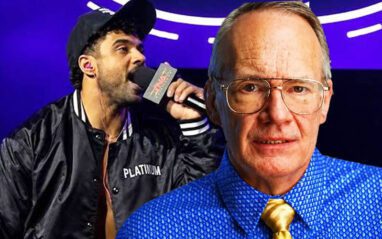
Max Caster’s one-match TNA run is still one of the biggest talking points coming out of Bound For Glory, and Jim Cornette thinks the company handled the situation all wrong. While Cornette had no issue identifying the Riyadh reference as the obvious problem, he believes the bigger failure happened backstage long before Caster ever walked through the curtain.
Speaking on his YouTube channel, Cornette recalled seeing the news that TNA had fired Caster after the Bound For Glory controversy. Naturally, his first thought was to find the clip and hear the rap for himself. Once he did, he immediately understood which line had caused the backlash—but he still couldn’t understand why it resulted in Caster losing his job.
“When I saw the news and when I turned on the Twitter machine and saw the news, I was like, ‘What the f*** did he say?’ And then I listened to the clip. And after I listened to the clip, I was like, ‘What the f*** did he say?'”
After hearing the rap, Cornette acknowledged that the Riyadh reference was clearly the issue because it referenced a recent tragedy. Even so, he immediately shifted the blame toward the people responsible for producing the segment rather than focusing solely on Caster.
“I know the one thing that was probably problematic, but having said that, there wasn’t really a reason to fire the guy because who was producing him?”
Cornette then walked through exactly how he believes a segment like that should’ve been handled backstage. If he’d been assigned to produce Caster’s match with Moose, he said the first step would’ve been gathering both wrestlers and the referee before the show to go over every part of the segment—including Caster’s entrance rap.
“Here would have been the procedure behind the scenes at a pay-per-view or a TV taping or whatever the f***. At least back when I was in the business, if I had been the producer for Max Caster and Moose, I got the format. I go, I sit down in front of both of them and their referee. ‘Okay, Moose, music, entrance. Max, music, entrance. You’re going to do your rap. What do you got for us tonight, young man?’ And let him do his f***ing thing.”
He even joked that he’d probably laugh at some of the material during rehearsal, but stressed that someone still needed to hear it before it aired. Cornette said that was especially important because Caster already had a reputation for trying to push the envelope.
“Probably laugh about it, you know, because when they’re not up, they might fumble it the first time or whatever, but you hear it. Especially because it’s not like it’s goddamn Nick Bockwinkel where, ‘Okay, Nick, you’ve been doing this for 35 years. You haven’t been kicked off television yet. Just go cut the promo.’ Max does have a history of trying to be edgy.”
In Cornette’s mind, fixing the situation would’ve been incredibly easy. He said the only line he would’ve removed was the Riyadh reference, while leaving the rest of the rap intact.
“So hear the promo. If I would have heard that, I would have said, ‘Take out Riyadh. People got killed, blah, blah, blah. Put something else in.’ And there’s nothing else that’s an issue. He didn’t say f***ing violating broadcast standards. And then we’d go over their match and their finish and blah, blah, blah.”
Cornette added that if Caster insisted on keeping the lyric, he wouldn’t have made the final decision himself. Instead, he would’ve taken the issue directly to whoever was running the show and let them decide whether the line stayed or went.
“If he really said, ‘Oh God, no, I gotta say this. My career depends on me getting out this greatest line that I’ve ever come up with,’ then because I’m just the producer, I’m not the boss, I’m going to go to—insert name here, depending on whoever the boss is on scene of whatever production this is in this fictitious world—and say, ‘Max wants to say this, this. Yay or nay?’ And then let him plead his case or whatever. It’s that big a deal.”
As the discussion continued, Cornette kept coming back to one question he believes TNA still hasn’t answered—who actually produced the segment? He said that detail completely changes where the blame belongs.
“I don’t know who didn’t ask him what he was going to say. Who produced the thing? Did he not tell him?”
Cornette explained that if Caster rehearsed one version of the rap and then changed it live, the responsibility falls entirely on him. But if producers knew what he planned to say beforehand and still allowed it to air, then they deserve just as much scrutiny.
“If he didn’t tell him and did it—he told him one thing and did another—well, then all the heat’s on Max. But I don’t—just for trivial s*** like this that could have been easily addressed before it became an issue, I don’t understand how this happens.”
That same frustration extended to TNA’s response after the controversy erupted. Cornette argued that management should’ve been asking questions internally before immediately focusing on Caster himself.
“When people were mad about something and TNA hears about it, I wouldn’t have called Max Caster. I’d say, ‘Who f***ig produced this s**t?'”
Later in the discussion, Brian Last argued that TNA’s handling of the situation ultimately created a much bigger story than the pay-per-view itself. Instead of people talking about Bound For Glory, they ended up talking about Max Caster’s firing.
“More people are talking about this than the TNA pay-per-view. They made this a bigger story by letting it become a bigger story.”
Cornette agreed, saying controversies often snowball once they aren’t dealt with before the show goes live: “That’s often the way that these things happen, as I recall.”
At this point, Cornette isn’t debating whether the Riyadh line was a mistake—he thinks that much is obvious. The bigger question, at least to him, is how a veteran company let a controversy like that reach live television in the first place. Months later, he’s convinced the bigger failure wasn’t what Max Caster said—it was everything that happened before he said it.
Do you agree with Jim Cornette that TNA should’ve stopped the rap backstage instead of firing Max Caster afterward? Let us know in the comments below.
This transcript was produced exclusively for Ringside News from the original recording. Republishing the transcription in full is prohibited. When using excerpts, provide prominent credit and a link to this article.
