
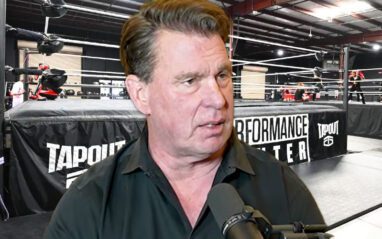
JBL doesn’t think wrestlers getting paid to train at WWE’s Performance Center have much room to complain about leverage. Until they’re actually making WWE money, he sees them as an investment the company is paying for and hoping eventually works out.
The subject came up on Something to Wrestle while discussing The Great Muta’s comments about young wrestlers earning good money and eventually building enough reputation to gain negotiating power. JBL had no problem with that idea, but he also had no problem with WWE protecting itself after spending money developing talent.
“They should. Yeah, they should. You know, a lot of the—I mean, they take a lot of chances on a lot of people. Look, I don’t have any problem with the cuts and the releases and the salaries. You know, it’s about what you negotiate, but WWE takes a lot of chances with a lot of people and they pay people incredibly well to train there. You know, these people that are there training may think they’re not getting paid that well. Buddy, listen, what we did as compared to what you do, understand it’s apples and oranges.”
JBL knows that comparison comes with the usual “old school” argument. He recalled living on roughly $220 to $250 per week while training after his football career and said he’d gladly have taken the kind of developmental salary wrestlers can receive now.
“And so I got like 250 bucks a week or 220 bucks a week or something. That’s one of the things I lived on when I trained. Now people say, ‘Oh, that’s your old school. That’s your old ways.’ No, I get that. I understand all that, and I wouldn’t trade what I did for anything. But if I had the choice of saying, ‘Okay, we’re going to pay you whatever they pay them down at NXT, 40,000, 80,000, whatever it is,’ that’s a pretty good wage to start out to learn how to trade—to train—to see if you can make it in this business.”
The catch is that plenty of those recruits never make it. JBL said he’s seen the huge developmental classes himself, and WWE is spending money on everyone in those rooms knowing only a portion will eventually become successful wrestlers.
“And so they spend a lot of money that just goes out the door because the people don’t make it. I go down there when I go down there and I see these huge classes. Most of those people don’t make it. So, you spend a lot of money trying to make whatever 30 or 40% that make it, or 20%. I have no idea what that percentage is.”
That’s also why JBL believes WWE has every right to try locking developmental talent into longer deals.
“So, I can see why they try to lock them in for long-term contracts because they need to make their money back for what all they’ve invested in. And I think that’s fair and just for them to do that.”
Then came the part that probably won’t go over quite as smoothly with everyone at the Performance Center. When Conrad Thompson argued that wrestlers need to consider how much revenue they’re actually making for WWE, JBL said trainees who aren’t appearing on television are bringing in nothing. He separated them from NXT talent already working television and didn’t soften his description of what someone exclusively training represents financially.
“Those young—those young people training down at NXT are bringing zero in. You bring zero in. You’re a—you’re a 100% negative.”
From there, JBL took the argument directly to leverage. WWE is gambling money on developmental wrestlers in hopes that some eventually become profitable stars, and until somebody reaches that stage, he doesn’t think they’ve earned much bargaining power.
“But you’re a minus quantity at that point. You don’t—you don’t have any leverage and you don’t deserve much leverage. I’m sorry. You know, but if you make it, you can end up making a ton of money.”
For JBL, making money is ultimately what changes everything. He doesn’t even care whether someone grew up loving wrestling if they can eventually become somebody people will pay to watch.
“I mean, if you can make it in the business, do I care if you love it or not? If you draw money and put a bunch of people in the stands, I could care less.”
WWE can spend years trying to turn a recruit into somebody who draws that money, and JBL clearly believes the company deserves something back for taking that gamble. Until a trainee proves they’re one of the people who can actually make it, he doesn’t think they have much leverage to work with.
This transcript was produced exclusively for Ringside News from the original recording. Republishing the transcription in full is prohibited. When using excerpts, provide prominent credit and a link to this article.
Do you agree with JBL that WWE developmental trainees don't deserve much leverage until they start making money for the company? Please share your thoughts and feedback in the comment section below.
