
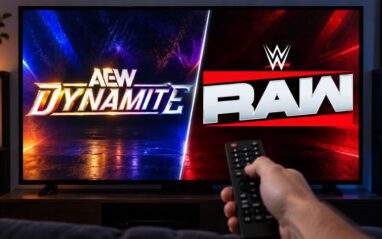
WWE and AEW are suddenly looking a whole lot stronger in the ratings, but that doesn’t necessarily mean millions of new fans just showed up overnight. Nielsen changed the way it measures television audiences, and the new system could be making both companies look hotter than they really are.
During Wrestling Observer Radio, Dave Meltzer and Garrett Gonzales discussed what the first stretch under Nielsen’s updated methodology is starting to reveal. SmackDown jumped to around 1.3 million viewers, AEW has posted some of its strongest cable numbers in years, and NXT recently exploded to 767,000 viewers with a 0.17 rating in the key demo.
That NXT number was especially wild because the show had usually been sitting between a 0.07 and 0.09 under the old system, sometimes dropping as low as 0.05. Meltzer had already pointed out that Nielsen made nine changes to its system, including one adjustment that gives Hispanic viewers more weight because Nielsen believed that audience had been undercounted.
“That helps wrestling. How much, I don’t know. But, you know, I mean, NXT had been doing under the old system between 0.07 and 0.09. Most weeks got as low as 0.05.”
“And then this is a 0.17. Way out of control. You know what I mean? Like, so. So I think that this is going to be very, very beneficial.”
Now the bigger concern is what happens if WWE and AEW start believing those bigger numbers automatically mean their shows are improving. Meltzer said the amount of movement created by Nielsen’s new system is uncomfortable when billions of dollars in television rights money can ride on those numbers.
“I know, I know. It’s, it’s, it’s — I don’t know what to say because it’s like, you know, billions of dollars are at stake and the variation is, is, you know, the variation is too much for comfort, you know what I mean? It’s, it’s not a good thing.”
That is why Meltzer said live attendance may be a much cleaner way to judge whether a wrestling company is actually getting hotter or colder. Then he laid out the scenario that could become a real problem. AEW could actually lose popularity over the next six months and still show stronger year-over-year ratings simply because the measurement system changed. Meltzer made it clear WWE could fall into the exact same trap.
“Again, that’s probably why live attendance is probably a lot more important to judge by, because that’s a real number. You know what I mean? Yeah, pay-per-view is a real number. You know, the pay-per-view numbers are, you know, at best are estimates, of course, but they’re not, they’re not, you know, like, you don’t change the system and all of a sudden have different numbers.”
“Let’s just say AEW gets less popular in the next six months, okay? They’re still going to have higher ratings because of the nature of this, these — the system versus the last system.”
“So it’s going to allow AEW, if they get less popular — and exactly the same for WWE — to tell themselves, ‘Oh, you know, like, if the product sucks, these people don’t know anything because look at our ratings,’ which is a super important metric to them.”
Garrett suggested that would create a false sense of security. Meltzer said it was even more about giving both companies false confirmation that everything they’re doing is working.
“The ratings are going to give them a fake — a fake, what’s the word?”
Garrett replied, “Sense of security?” Meltzer continued:
“Not even sense of security, but just a fake affirmation that they’re doing great, even if everyone tells you they’re not and they’re really not.”
That could get especially messy if ticket sales start dropping while television ratings continue climbing. Meltzer said WWE or AEW could simply blame weaker attendance on outside factors while pointing to Nielsen numbers as proof that fan interest is still strong.
“And even if, in cases of both these companies, if the live events go down, they’ll go in there and they will have their excuses for the live events going down as, ‘Oh, it’s the economy,’ right? People are — but, but we’re really popular because look at our ratings.”
That is where the issue stops being just a ratings debate and starts becoming a creative problem. If executives believe the numbers are telling them everything is working, they may not recognize when fans are actually checking out. Meltzer ultimately argued that even a flawed ratings system is easier to analyze when the rules stay the same.
“And that’s where you get the false reaction of not realizing that maybe you have to improve because it’s the system that’s, you know, that’s — yeah, it’s, it’s a bad thing.”
“They never should — they never should have changed because whether it was perfectly accurate before or not, at least it was a consistent way of doing things. And now that it’s so inconsistent, it’s, you know, you’re not getting — you’re not getting the value in the results of studying it or any — or learning from it.”
The new Nielsen numbers look great for WWE and AEW right now, and nobody in either company is going to complain about bigger ratings. The problem comes if those numbers start telling executives everything is fine while ticket sales, fan interest and the actual product are moving in the opposite direction. At that point, the ratings boost could start looking less like a win and more like a very expensive illusion.
Do you think Nielsen’s new system is making WWE and AEW look stronger than they really are? Let us know what you think and leave your feedback in the comments.
This transcript was produced exclusively for Ringside News from the original recording. Republishing the transcription in full is prohibited. When using excerpts, provide prominent credit and a link to this article.
