
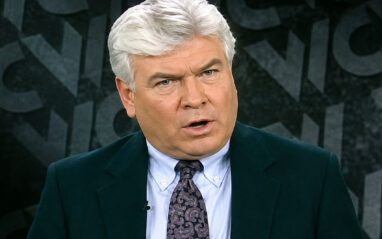
Former WCW executive Jim Herd, one of the most controversial figures in professional wrestling history, has passed away at the age of 87. Herd, who ran World Championship Wrestling during a turbulent period that included the infamous firing of Ric Flair, died in October 2026, although the news wasn’t publicly announced until November 10.
Conrad Thompson confirmed Herd’s passing in his latest Conrad’s Corner column for Uncrowned. Thompson opened his column by announcing the death of the former WCW boss, who oversaw the promotion after Ted Turner purchased Jim Crockett Promotions in 1988.
“Hey, hey, it’s Conrad — and I’ll start this week with some sad news. Jim Herd, World Championship Wrestling’s first executive vice president, passed away in October at age 87. Jim Herd ran the promotion from 1989 until January 1992 after Turner Broadcasting bought Jim Crockett Promotions. A top executive for Ted Turner, Herd was tasked by ‘Billionaire Ted’ with turning WCW into a profitable business.”
Herd’s wrestling career was unlike that of most promoters. Before taking charge of WCW, he worked in television broadcasting and the restaurant business, serving as station manager for KPLR-TV in St. Louis before moving into an executive role overseeing 68 Pizza Hut locations.
His business success eventually caught the attention of Turner Broadcasting executive Jack Petrik, who brought Herd into WCW following the company’s acquisition of Jim Crockett Promotions. Herd was hired to turn the struggling wrestling promotion into a profitable operation, but his time in charge would become one of the most criticized periods in WCW history.
The biggest controversy came in July 1991, when Herd fired Ric Flair following a breakdown in contract negotiations. The decision sent shockwaves through professional wrestling, as Flair jumped to the WWF and appeared on television carrying the WCW/NWA Big Gold Belt.
That wasn’t the only decision that made Herd unpopular with wrestlers and fans. He famously suggested turning Flair into a gladiator-style character named Spartacus and was also associated with the proposed introduction of a tag team of hunchbacks who supposedly couldn’t be pinned because of their physical appearance.
Herd also oversaw Kevin Nash’s infamous Oz character, which was connected to Turner’s interest in classic films. Those creative decisions became the subject of criticism for decades, with wrestling personalities frequently using Herd’s tenure as an example of corporate executives interfering in the wrestling business.
However, Thompson believes Herd deserves a lot more credit than he’s received. Despite being Ric Flair’s son-in-law, Thompson defended the former WCW executive and argued that his accomplishments have been largely forgotten because of his most controversial decisions.
“History, it is said, is written by the winners. It’s also decided by those with the loudest voices.”
Thompson pointed out that Herd helped WCW secure a major sponsorship agreement with Coors beer, negotiated a footwear deal with Roos, and expanded the promotion’s merchandising business through trading cards and action figures.
He also credited Herd with bringing a more aggressive approach to advertising and corporate partnerships, something that would eventually become a major part of WWE’s business model.
“Petrick didn’t hire Herd to ‘fix’ wrestling storylines, he was brought in as a business executive to turn Crockett’s red ink into black ink.”
Despite the criticism surrounding his creative decisions, several major moments in WCW history happened while Herd was running the company. Ric Flair and Ricky Steamboat delivered their legendary trilogy of matches in 1989, while Sting captured his first NWA World Heavyweight Championship at The Great American Bash in 1990. Big Van Vader, The Great Muta, Terry Funk, and Scott Steiner were also among the major talents who arrived or established themselves in WCW during Herd’s time in charge. Thompson argued that those accomplishments deserve recognition alongside the mistakes that made Herd such a controversial figure.
“History often forgets all of these ‘wins’ when retelling Herd’s story. All I’m merely suggesting is we should take the good with the bad.”
The bad blood between Herd and Flair became a major part of WCW history. In fact, Ric Flair previously named Jim Herd among the executives he blamed for WCW’s downfall, alongside Eric Bischoff and Vince Russo. Even with that history, Thompson believes Herd’s decision to fire Flair needs to be considered in the context of WCW’s financial problems at the time. He argued that Herd’s primary responsibility was making money for Turner Broadcasting, not necessarily keeping every wrestler happy.
“Jim Herd was hired to stop WCW losing money. As much as we don’t love the way it reads, it’s the truth that WCW never turned a profit with Ric Flair as their top star.”
Herd eventually resigned from his position as WCW Executive Vice President on January 8, 1992. Following his departure, he moved into the casino business and largely disappeared from professional wrestling, making only occasional appearances for interviews about his time running the company.
Thompson revealed that he had tracked Herd down several years earlier and learned that the former executive had little interest in revisiting his wrestling career. According to Thompson, Herd viewed WCW as a corporate assignment rather than a lifelong passion and had no desire to return to the business.
“I tracked him down several years ago, and he explained he never looked back on wrestling because it stopped being fun for him. WCW was simply a job he took to advance up the Turner corporate ladder. He did his best and then moved on.”
Thompson closed his tribute by asking wrestling fans to reconsider how Herd’s time in charge should be remembered, pointing to the accomplishments that happened under his leadership despite the many controversies.
“I think history should be a little kinder to Herd’s reign. We enjoyed plenty of great moments and matches on his watch, and in a lot of ways he was ahead of the curve when it came to advertising in the wrestling space. Rest in peace, Mr. Herd.”
Herd’s time in WCW will always be connected to the firing of Ric Flair and some of the strangest creative ideas the company ever considered. But his influence on WCW’s early corporate business operations can’t be ignored, and his passing marks the loss of another important figure from one of wrestling’s most memorable eras. Ringside News extends its condolences to Herd’s family, friends, and those who knew him.
How do you think Jim Herd should be remembered in wrestling history? Did his controversial decisions do more harm than good, or does he deserve more credit for helping WCW grow as a business? Let us know your thoughts and feedback in the comments below.
