
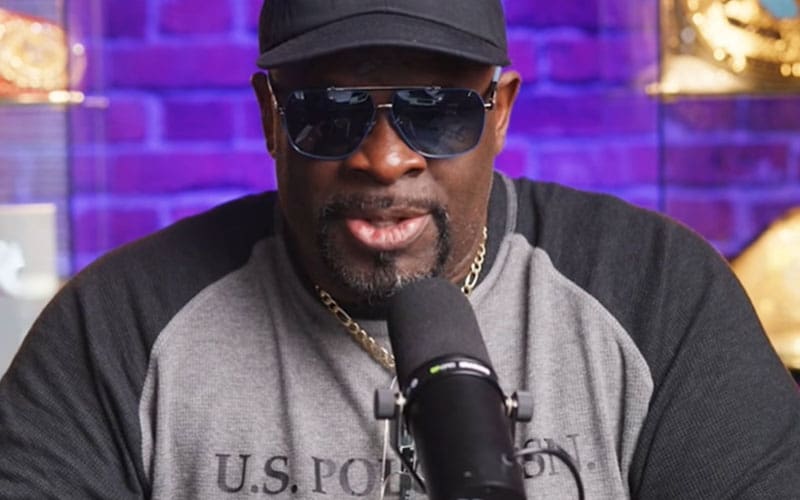
D-Von Dudley spent years putting people through tables, but when WWE moved him backstage in 2016, he wanted nothing to do with his new job. The WWE Hall of Famer admitted he hated being a producer for nearly two years because he wasn’t ready to stop wrestling, and the transition was a lot harder than he expected.
During an appearance on the Duke LovesRasslin podcast, Dudley explained that everything changed when his partnership with Bubba Ray Dudley came to an end in 2016. Bubba wanted to pursue other opportunities, but D-Von still had plenty left in the tank. He asked WWE whether he could continue wrestling without his longtime tag team partner, only to have the company reject the idea.
“I wasn’t ready. I wasn’t ready to step out of the ring at that time in 2016 and to be a producer. You know, I wanted to still wrestle. But because of the fact that, you know, the Dudleys kind of went their separate ways after that first contract was over, nothing, you know, bad or anything, but it was just that Bubba felt that he wanted to do other things and he wanted to venture off into, you know, um other venues.”
D-Von said he wasn’t given much of a choice after WWE turned down his request to keep wrestling. He wanted to remain involved with the company, so he accepted a producer position despite having no desire to leave the ring.
“So to me, I just wasn’t ready. And when I asked, could I still wrestle for the company um without him uh because he decided to, you know, do his own thing, they told me no. And I said, well, do I have a choice? I got no other choice. I said, I you know, I want to still be involved in the business. I still want to be able to, you know, contribute in some way. And if that meant being a producer, then so be it.”
That’s when things got even worse for D-Von. He admitted that he absolutely hated the role during his first year and a half to two years. After spending decades taking instructions from producers, he suddenly found himself responsible for giving those instructions to other wrestlers.
“For the first year and a half, the two years, I hated it because I was so eager to get back into that ring and it wasn’t clicking right away for me cuz I was used to being told what to do by the producers or slash agents at the time when I was talent and working for the company.”
D-Von explained that knowing how to wrestle and knowing how to teach someone else are two completely different things. He understood what needed to happen inside the ring, but explaining those decisions to younger talent wasn’t always easy.
“And it was it’s very hard to take what you have and explain it as a producer or an agent to the talent that’s going, you know, on to be stars of today. Because not everybody can teach. You know what to do. You know how to do it, but it’s very hard to sometimes give that knowledge to somebody and to tell them how to do it because you know what to do in certain situations.”
“You know when things go wrong how to fix it. But sometimes it’s very hard to explain it to somebody, you know, and try to teach them you know the right way of doing it as opposed to us always wanting to do things our way. And not only that, but once you explain it to them, how do you diffuse the situation when even they don’t agree with you? And, you know, they’re upset at Vince or they’re upset at whoever’s in charge because they feel it should go a certain way.”
The job also meant dealing with wrestlers who weren’t happy with Vince McMahon’s creative decisions. D-Von said he sometimes had to be the bad guy, but he couldn’t afford to turn every disagreement into an argument.
“You know, sometimes you have to be the bad guy, but you have to do it in a in a way where they can still respect you. And that was one of the things I learned as being talent.”
“You know, I’m not trying to lose my job. I I understand what you’re saying, but this is not our sandbox. You know, we have to do what is being told and yes, we can have our opinions. There’s nothing wrong with that. You can put your input into it, but if they don’t accept it, then you got to make best with what you got.”
D-Von said those situations taught him how to approach talent without creating unnecessary problems backstage. His job was to carry out McMahon’s instructions, even when the wrestlers involved didn’t agree with the direction.
“So So that over into being producer, because there were many talent that didn’t agree with Vince in the way in the direction that their storyline was going. And it was my job, once I got it from Vince and I had to explain to the talent, you know, I had to say it in a way where it wasn’t confrontational. I’m not going to be like, no, you’re going to do it this way and that’s it. I had to think of ways and how to approach them. And I learned. And I learned from everybody who basically taught me the other end of the side of the business.”
D-Von eventually spent seven years as a WWE producer before leaving the position in January 2023. He has previously explained that he still wanted to wrestle after his 2016 departure from the ring, and he has also discussed what happened when Vince McMahon wasn’t happy with a match.
D-Von eventually figured out the backstage business, but that doesn’t change how miserable he was when WWE first moved him out of the ring. After years of making his name as one-half of the Dudley Boyz, he was stuck doing a job he never wanted while watching other wrestlers do what he still loved.
Do you think WWE should have given D-Von Dudley a chance to continue wrestling without Bubba Ray, or was moving him into a producer role the right decision? Let us know your thoughts and feedback in the comments.
This transcript was produced exclusively for Ringside News from the original recording. Republishing the transcription in full is prohibited. When using excerpts, provide prominent credit and a link to this article.
